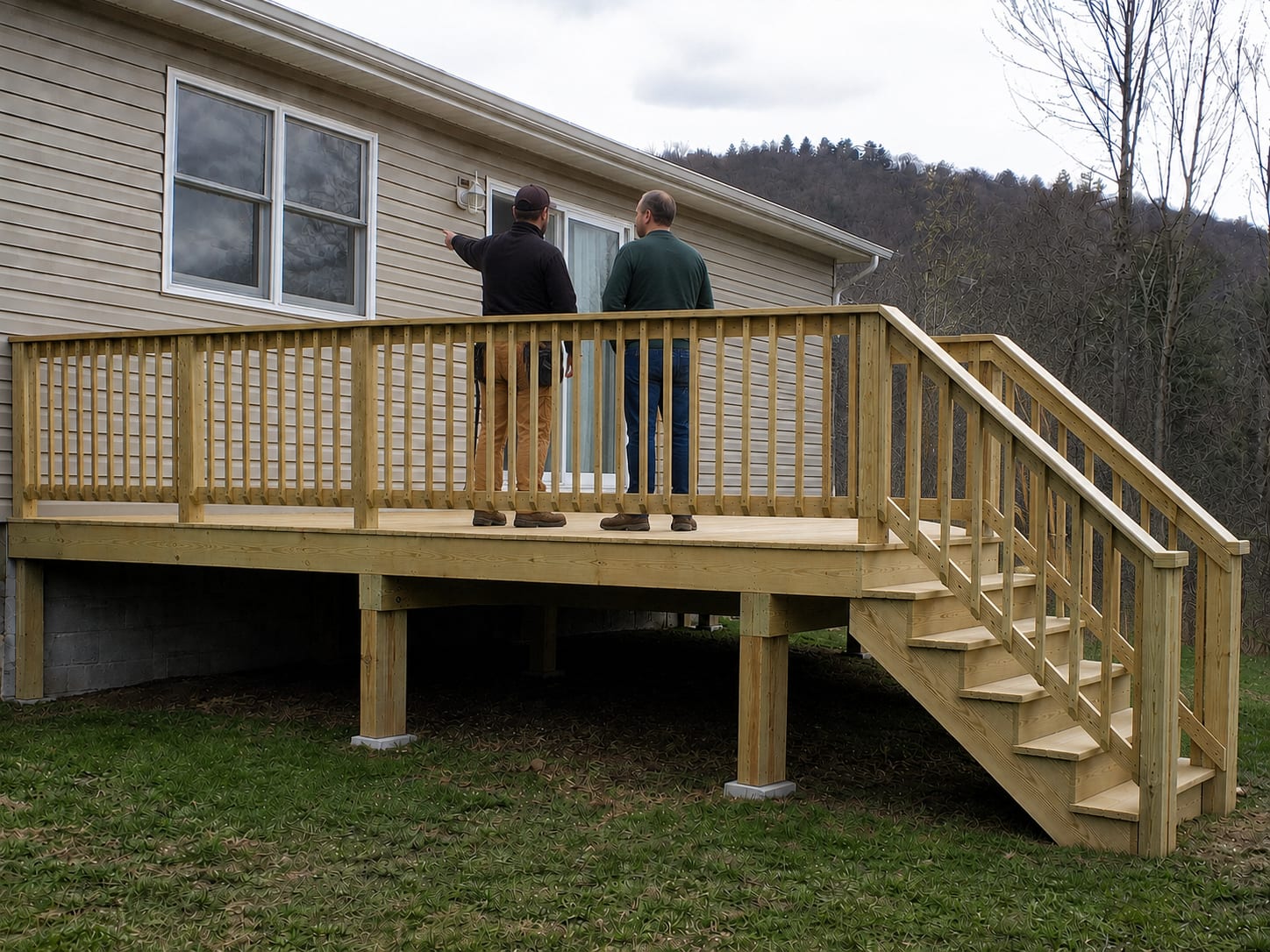
In Chattaroy the rot is usually at a joint. These houses have been added onto over the years rather than replaced, and where the original building meets whatever was built onto it is where water gets in and stays.
Had them out after the back steps started going soft underfoot. He came and looked properly before quoting anything, and told me the structure underneath was still sound — so it ended up a smaller job than I had braced myself for. Turned up when he said he would, cleaned up after himself, and the price at the end was the price we agreed. Not much more you can ask for.
Owner replied
S
Skyler White
9 months ago
Called on a Tuesday and had someone out the same week. What I appreciated most was being told straight what needed doing now and what could safely wait until spring. No pressure and no trying to talk me into the bigger version of the job. It has held up fine through the winter since.
T
Trevor Alford
2 months ago
The quote came through itemised and the final bill matched it, which has honestly not been my experience with everyone around here. They worked around an awkward driveway without once making it my problem, and left the place tidier than they found it. Would have them back.
K
Kaleb Withrow
3 weeks ago
Fair price, showed up on time, tidy work. No complaints.
See something like yours?
Send a few photos and we'll tell you what it'll take — free written quote, no pressure.
A rear addition or an enclosed back room built onto an original house creates a junction that has to be detailed properly to stay dry — flashing where the roofs meet, a proper break at the wall, and a moisture barrier under whatever the new part sits on. Frequently one or more of those was not done, because the work was done to make the house fit a family rather than to a specification.
Framing either side of an addition joint
Sole plates on additions built on slab
Roof-to-wall junctions between old and new sections
Enclosed back rooms that used to be porches
Sill plates and low framing on the original house
Why Choose Mackwood Construction?
What you get when Mackwood does your wood repairs — and what we won't do.
Free written quote, itemised before anything starts
We get underneath and look properly before quoting — not from the kerb
We'll tell you straight if a repair isn't worth doing
Based in Williamson — Mingo and Logan counties, about an hour out
Straight answers on permits, which differ either side of the county line
Built for this climate: drainage, flashing and ground contact done right
From first call to finished work — no surprises in between.
Step 1
Tell us about the project
Call, text, or send a message with what you're looking to build or repair. No form to fill in and no call centre — it comes straight to us, and you'll get a real answer about whether it's something we do.
Step 2
Send photos or schedule a look
A few photos are often enough to tell us what we're dealing with. Where it isn't — anything structural, anything hidden underneath — we'll come out and look properly before quoting rather than guessing from the kerb.
Step 3
Get a clear quote
You get a written quote that itemises the work, so you can see what you're paying for and what you aren't. If we think part of it isn't worth doing, we'll say so. No pressure and no surprises at the end.
Step 4
We build it right
We turn up when we said we would, work clean, and haul the offcuts away with us. The job gets built to last in this climate — and we'll walk it with you before we call it finished.
Not sure what your wood repair needs?
We'll come and look, then tell you straight — including if it isn't worth doing.
My back addition is the part that's failing. Is that normal here?
It is the most common thing we find in Chattaroy. Additions were built onto these houses at different times, and the joint between old and new is where water gets in and where framing gives up first.
The damage shows on the old part but you say the source is the new part. How?
Water tracks. It gets in at a junction that was never flashed properly, runs down inside the structure, and surfaces wherever it finally finds its way out — often on the other side of the joint and well below where it entered. That is why we trace it before repairing anything.
The house flooded. Does that change the repair?
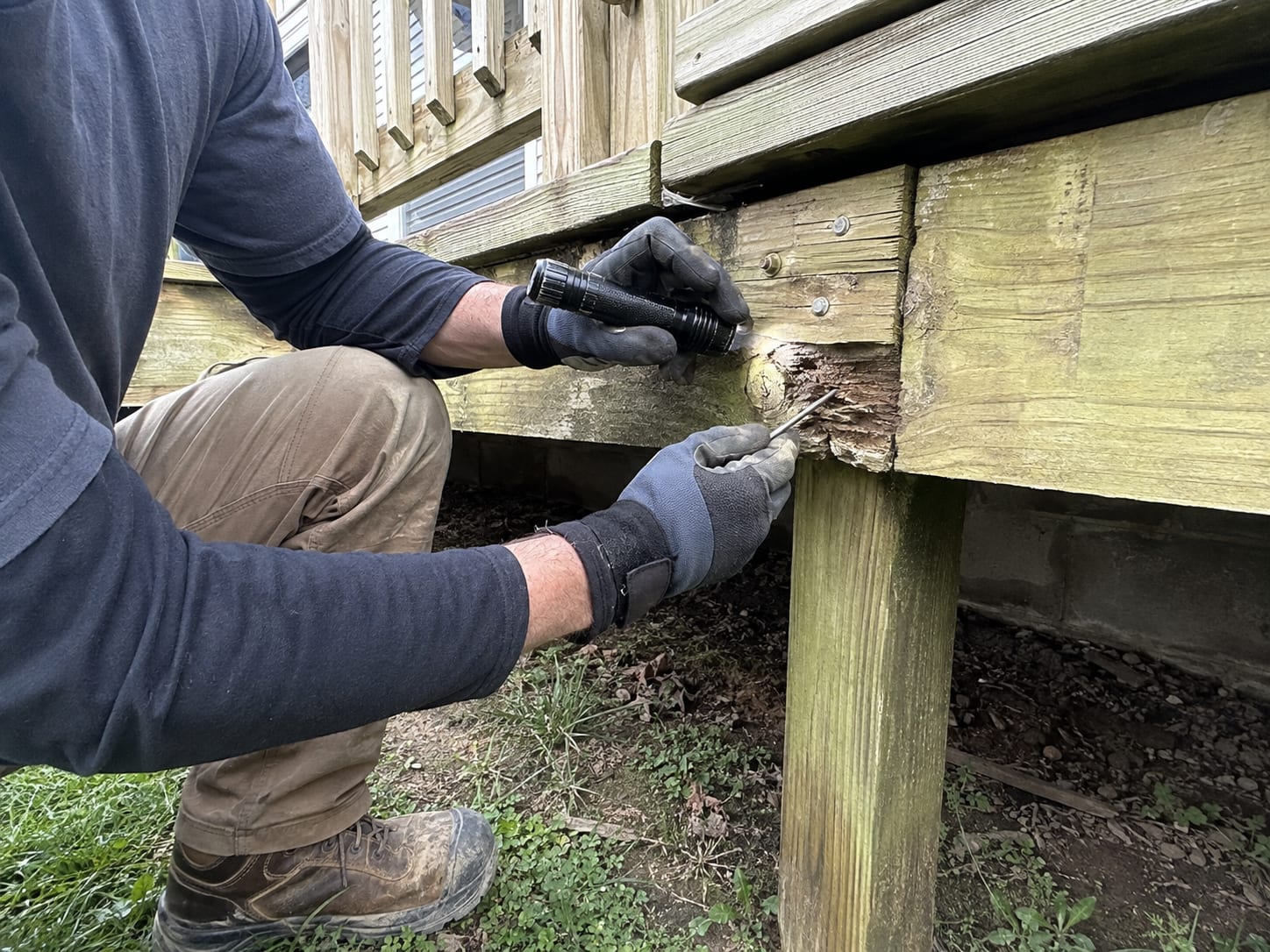
It changes what we check and what we build with, not what we can do. We probe the low framing rather than judging by feel, and the repair goes back in material rated for where it actually sits.
Is a small repair worth you coming out for?
Here, yes. We are about ten minutes away, so a half-day job on a threshold or a run of trim does not carry the travel that makes it awkward further out.
Is Chattaroy too small a job for you to come out?
No, and it's the one place where that's least likely to be a problem. We're about ten minutes away, so small repairs here don't carry the travel cost that makes them awkward further out.
My back addition is the part that's failing. Is that normal?
It's the most common thing we find in Chattaroy. Additions here were frequently built onto the original house over time, and the joint between old and new is usually where water gets in and framing gives up first.
The house has flooded before. Does that change the repair?
It changes what we check, not what we can do. We probe the low framing rather than judging by what the floor feels like, because flood rot shows up years later and well below where anyone is looking.
Most people are buying a result, not a list of tasks. Pick a topic to see what we look at before quoting in Chattaroy.
More on wood repair work in Chattaroy
So that joint is the first place we look. Water tracking down inside it wets the framing on both sides, and the visible damage often appears on the older half while the source is on the newer one.
Sole plates on additions are the other recurring one. Where a later addition was built on a slab with little or no moisture break underneath, the bottom plate wicks water continuously and takes the wall framing above it with it.
Low ground, and damage in two directions
There is very little in Chattaroy that is not close to the river. Properties on the flat have taken Tug Fork water more than once; the ones tucked against the hill take runoff instead. The exposure differs and the outcome does not — framing that stays wet.
For repair work that means we probe low framing on any house here rather than judging by what the floors feel like. Flood rot in particular shows up years after the water went down and well below where anyone is looking.
It also means the repair gets built for the conditions rather than back to the original spec. Ground-contact material where it belongs, a real break between wood and anything damp, and airflow kept open where it was closed off by a later addition.
Close enough to look before quoting
Chattaroy is about ten minutes from the Williamson base, and on rot work that matters more than on most jobs. The extent of the damage is frequently only clear once something is opened up, and being close means we can look, price accurately, and come back — rather than pricing defensively for a trip we do not want to make twice.
It also makes the small end of this worth doing. A rotten threshold, a run of trim, or one bad window frame is a normal job here rather than one where the travel outweighs the carpentry.
Homes around Chattaroy
Chattaroy is strung along the bottom between the Tug Fork and the hillside, and the housing reflects that — wood-framed homes built on the flat wherever there was room, a lot of it former coal-camp stock that has been added onto over the years rather than replaced. Porches, rear additions, and enclosed back rooms are common, and they were often framed by different hands at different times. That matters more than it sounds: the additions are usually where the framing and the water problems meet.
What we see locally
There is very little ground here that is not close to the river. Properties on the flat have taken Tug Fork water more than once, and the ones tucked against the hill take runoff instead, so the exposure is different but the result is the same — framing that stays wet. The failures we find are concentrated low: sill plates, joist ends, post bottoms, and the sole plates in additions that were built without much of a moisture break underneath.
Getting to the job
Chattaroy is the closest town on our list — about ten minutes from Williamson. That changes the economics of small work more than anything else here. A half-day repair that would be marginal an hour out is a straightforward job in Chattaroy, and we can come back for a second look or a forgotten piece of material without it costing the day.
Get a free quote for wood repairs in Chattaroy
Tell us what you're building or repairing and get a clear, no-pressure quote. Free quotes, honest answers, and craftsmanship built to last.