Had them out after the back steps started going soft underfoot. He came and looked properly before quoting anything, and told me the structure underneath was still sound — so it ended up a smaller job than I had braced myself for. Turned up when he said he would, cleaned up after himself, and the price at the end was the price we agreed. Not much more you can ask for.
Owner replied
S
Skyler White
9 months ago
Called on a Tuesday and had someone out the same week. What I appreciated most was being told straight what needed doing now and what could safely wait until spring. No pressure and no trying to talk me into the bigger version of the job. It has held up fine through the winter since.
T
Trevor Alford
2 months ago
The quote came through itemised and the final bill matched it, which has honestly not been my experience with everyone around here. They worked around an awkward driveway without once making it my problem, and left the place tidier than they found it. Would have them back.
K
Kaleb Withrow
3 weeks ago
Fair price, showed up on time, tidy work. No complaints.
See something like yours?
Send a few photos and we'll tell you what it'll take — free written quote, no pressure.
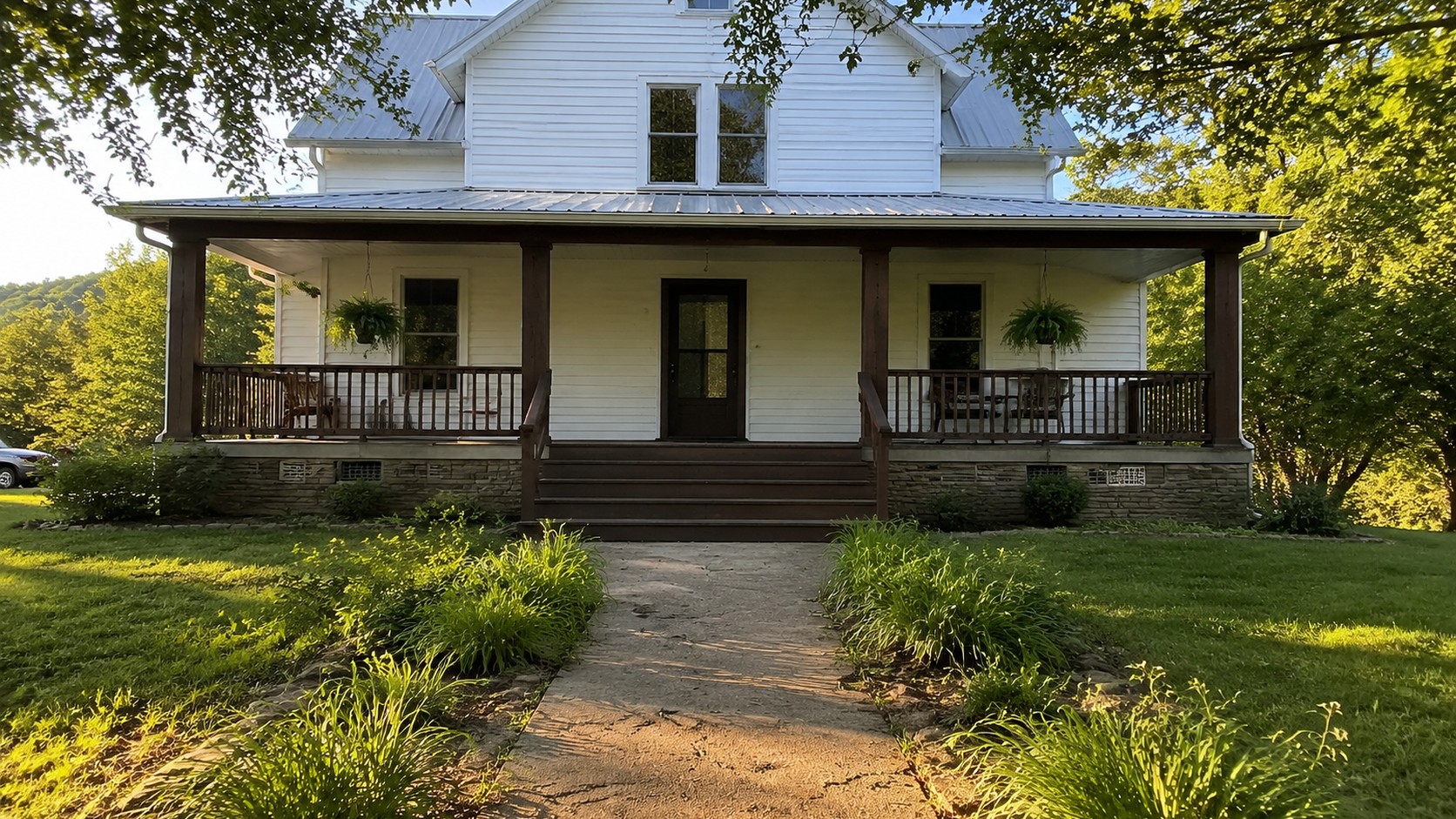
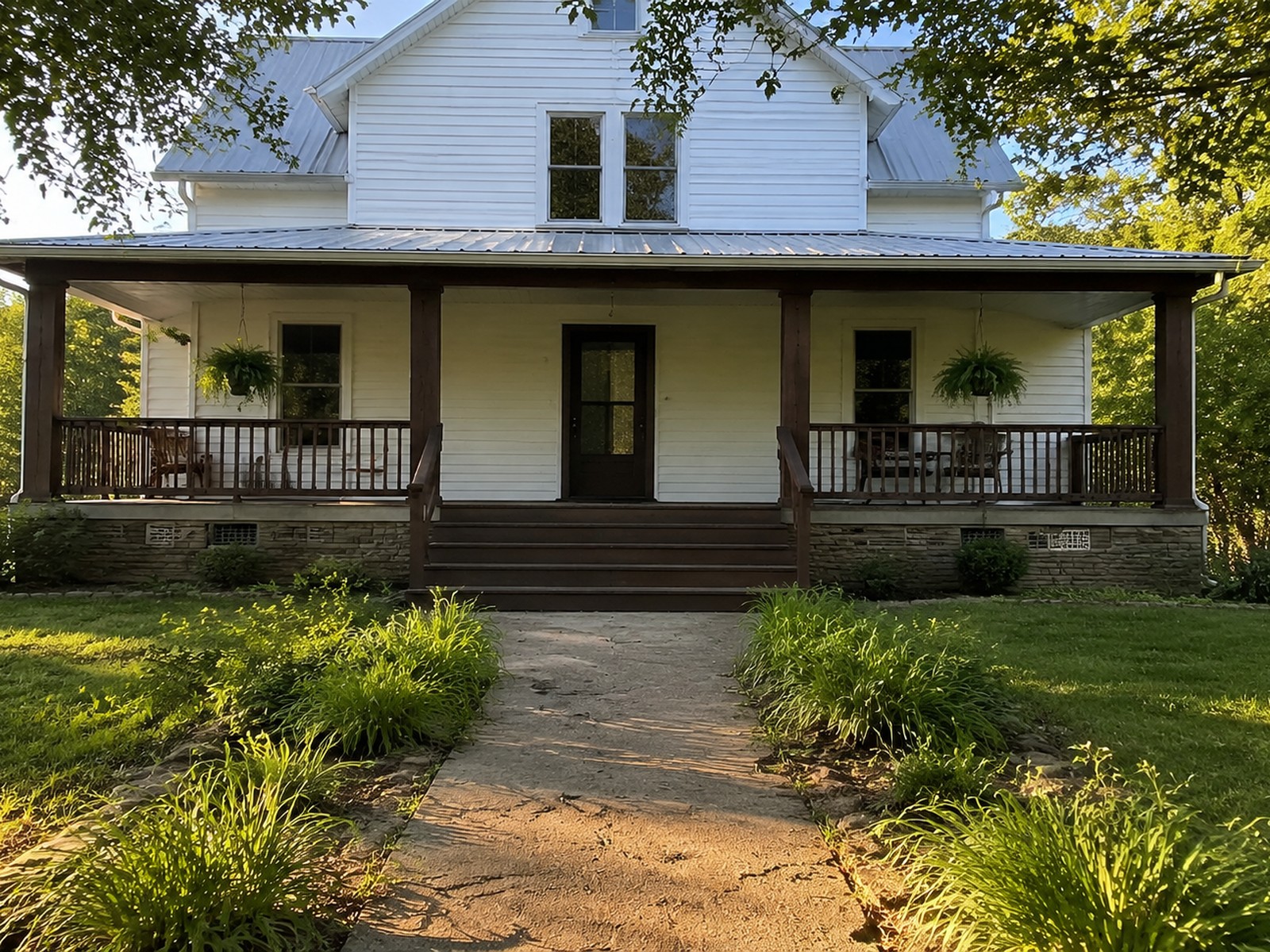
A porch is the part of an older house that decides how the whole place reads from the street, and the part the people living there actually use. Mackwood Construction is a porch builder WV homeowners call when the existing one is past repairing, or when there was never a proper one to begin with.
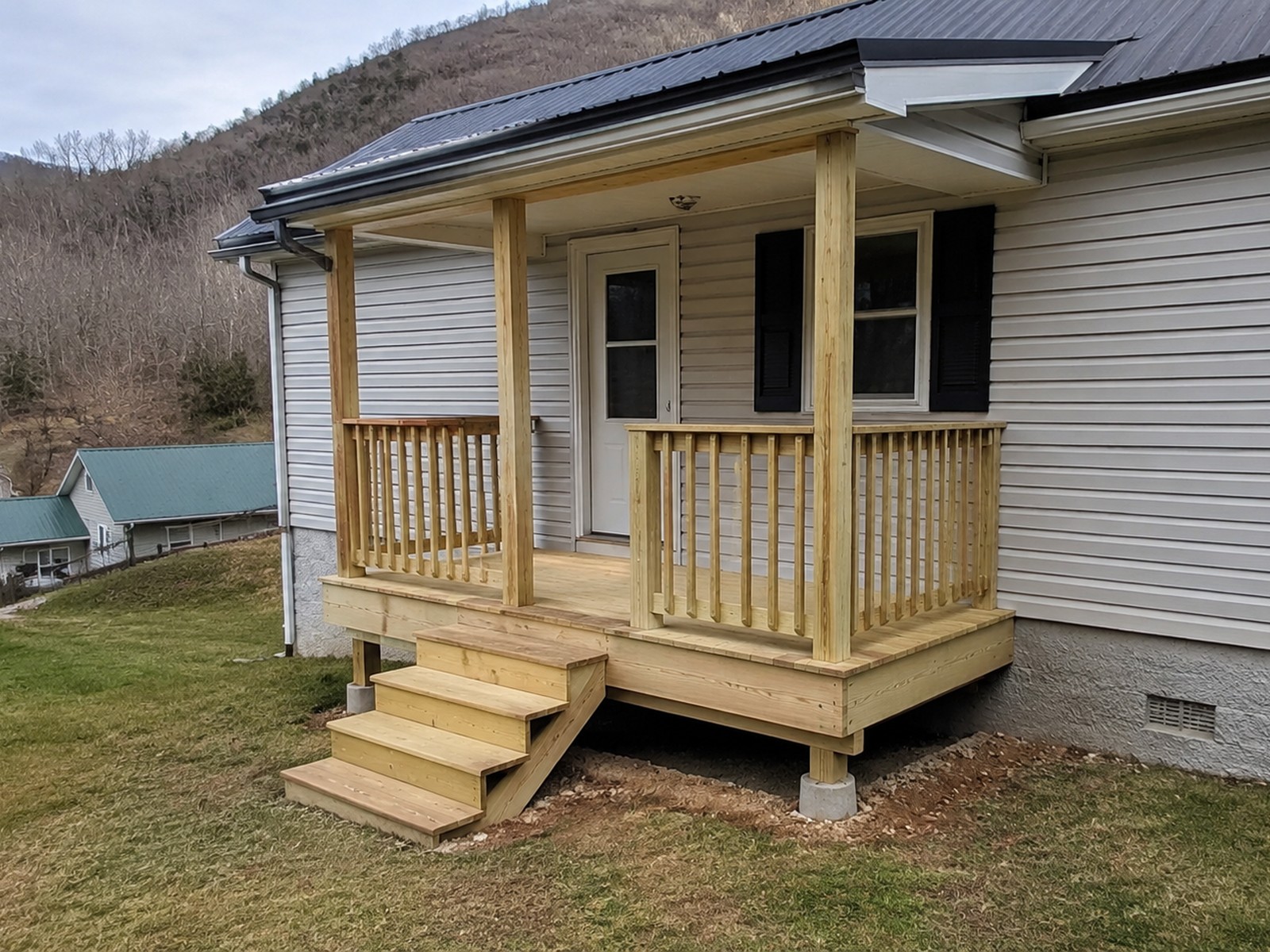
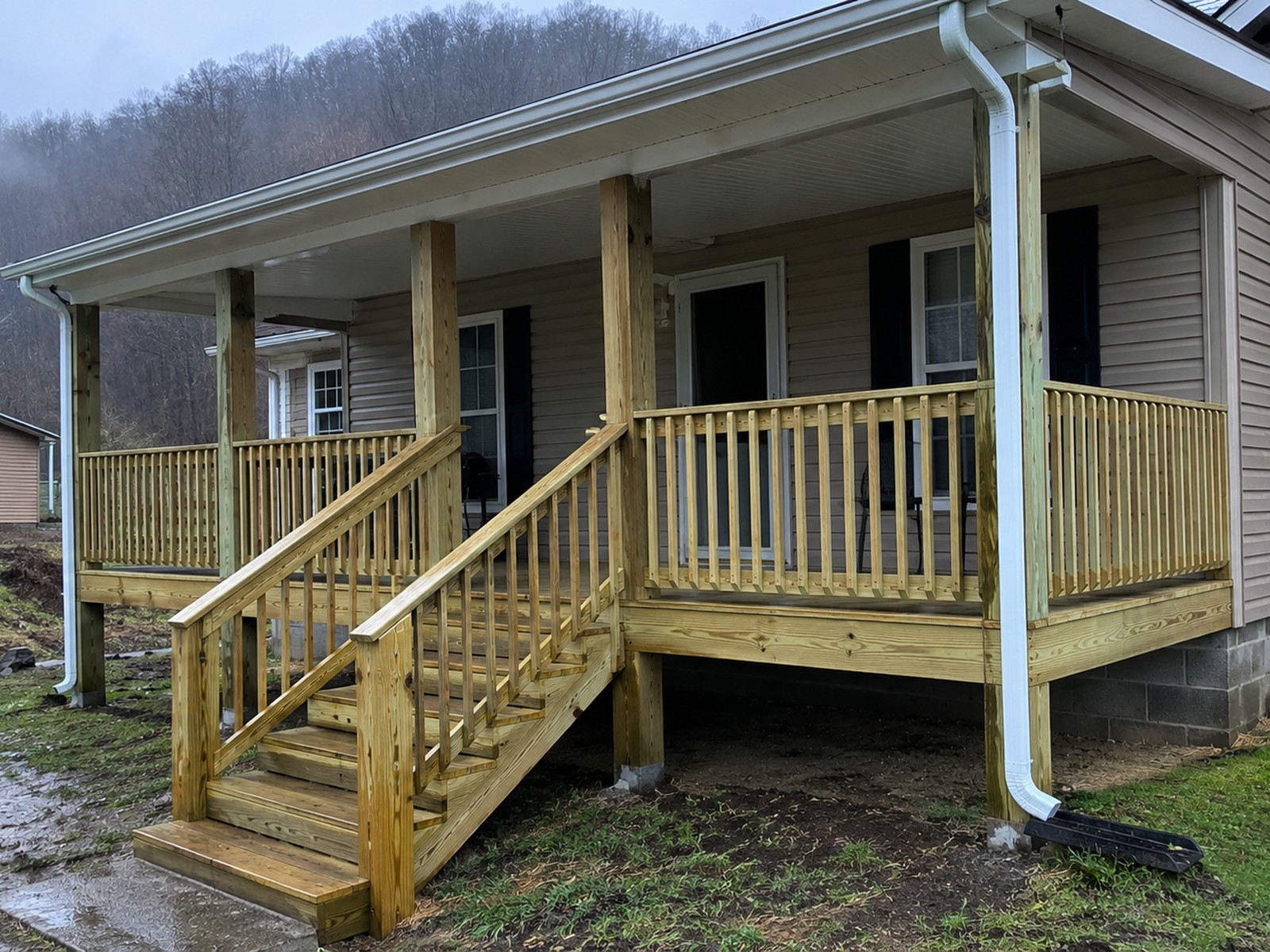
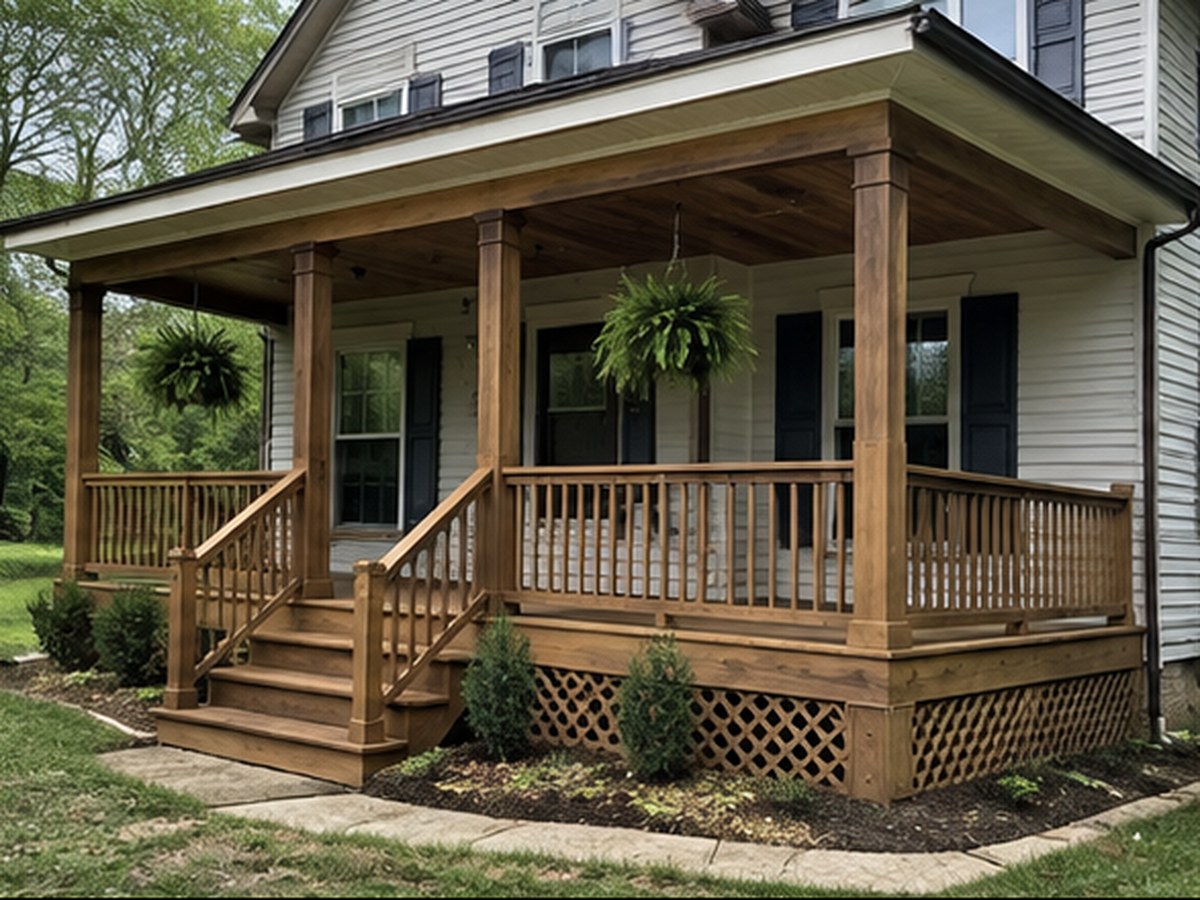
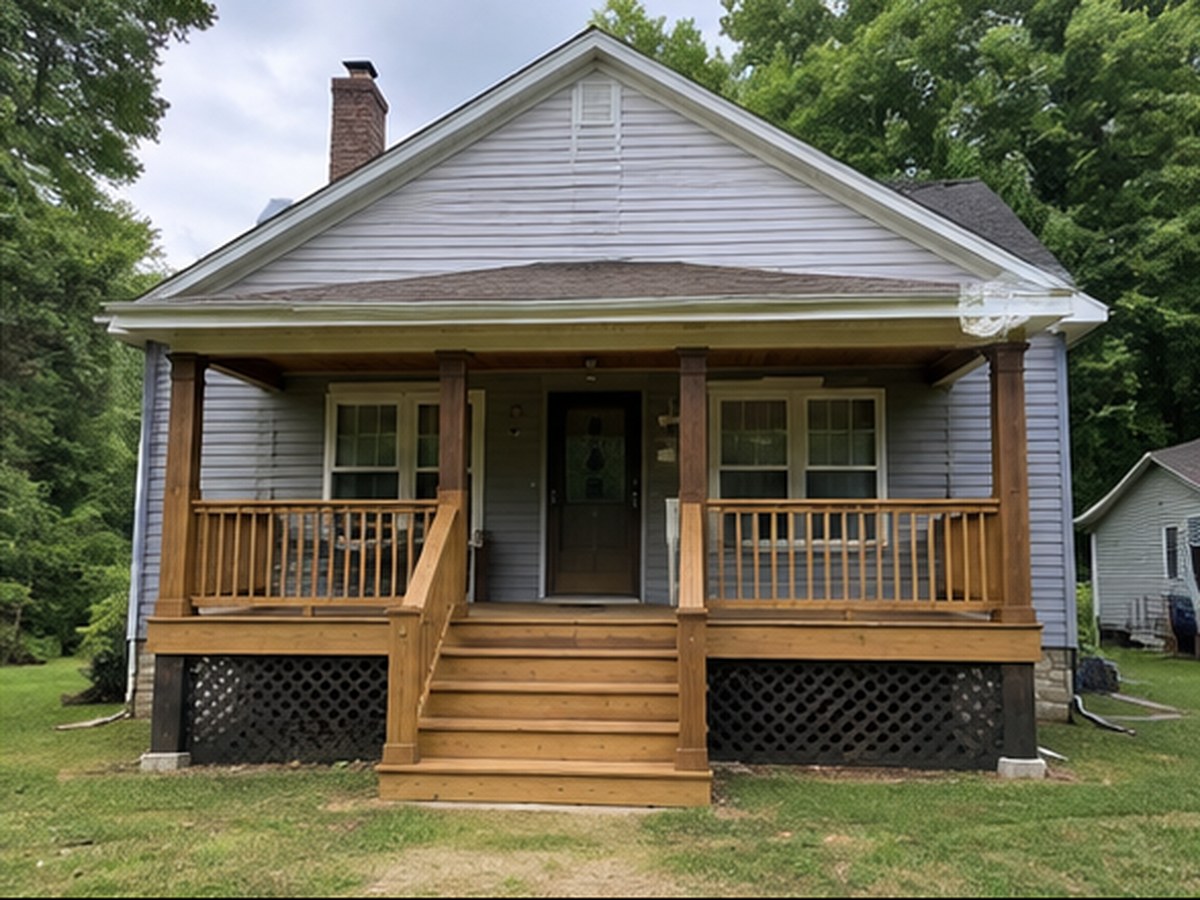
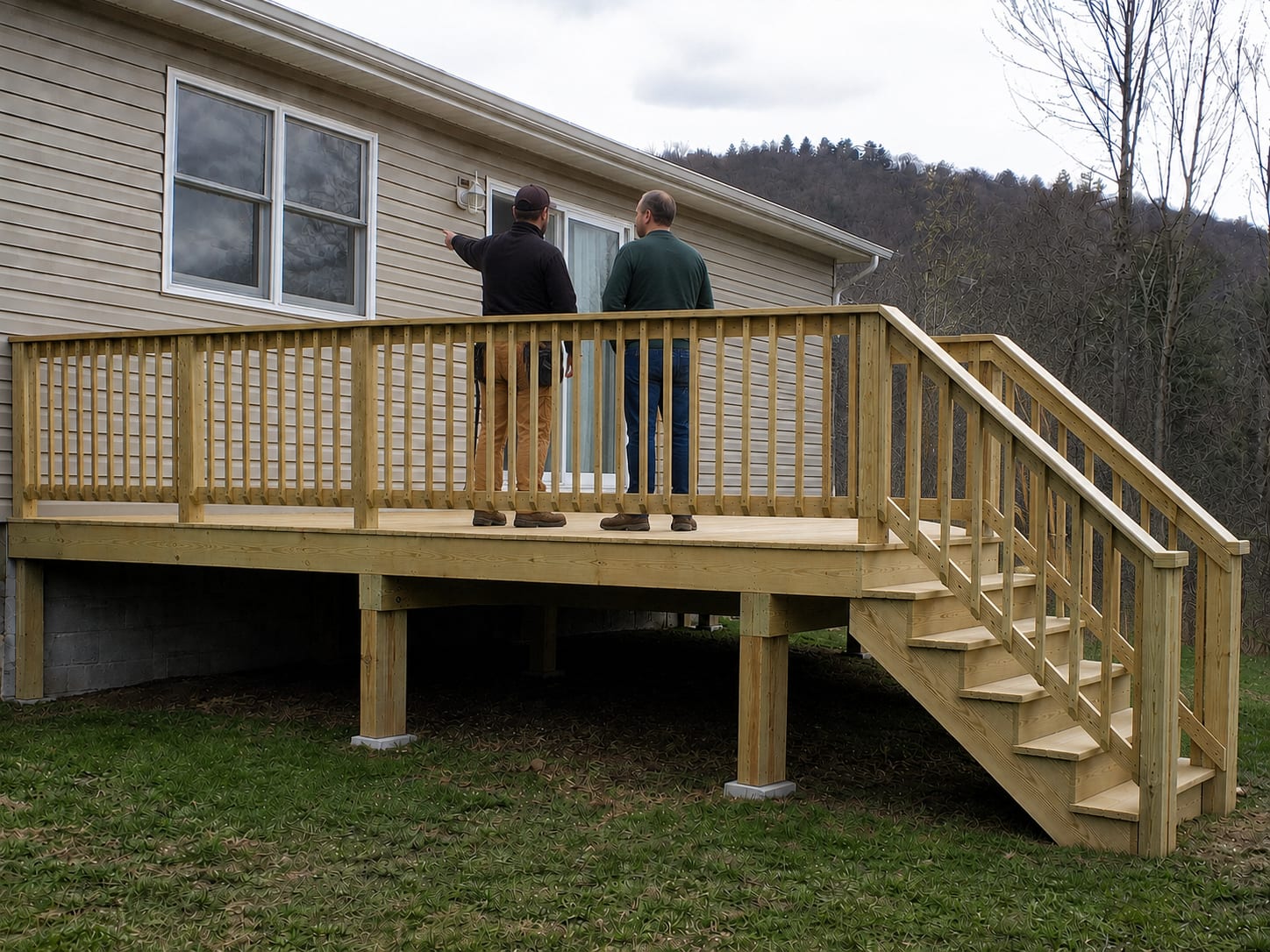
New covered porches, front and back
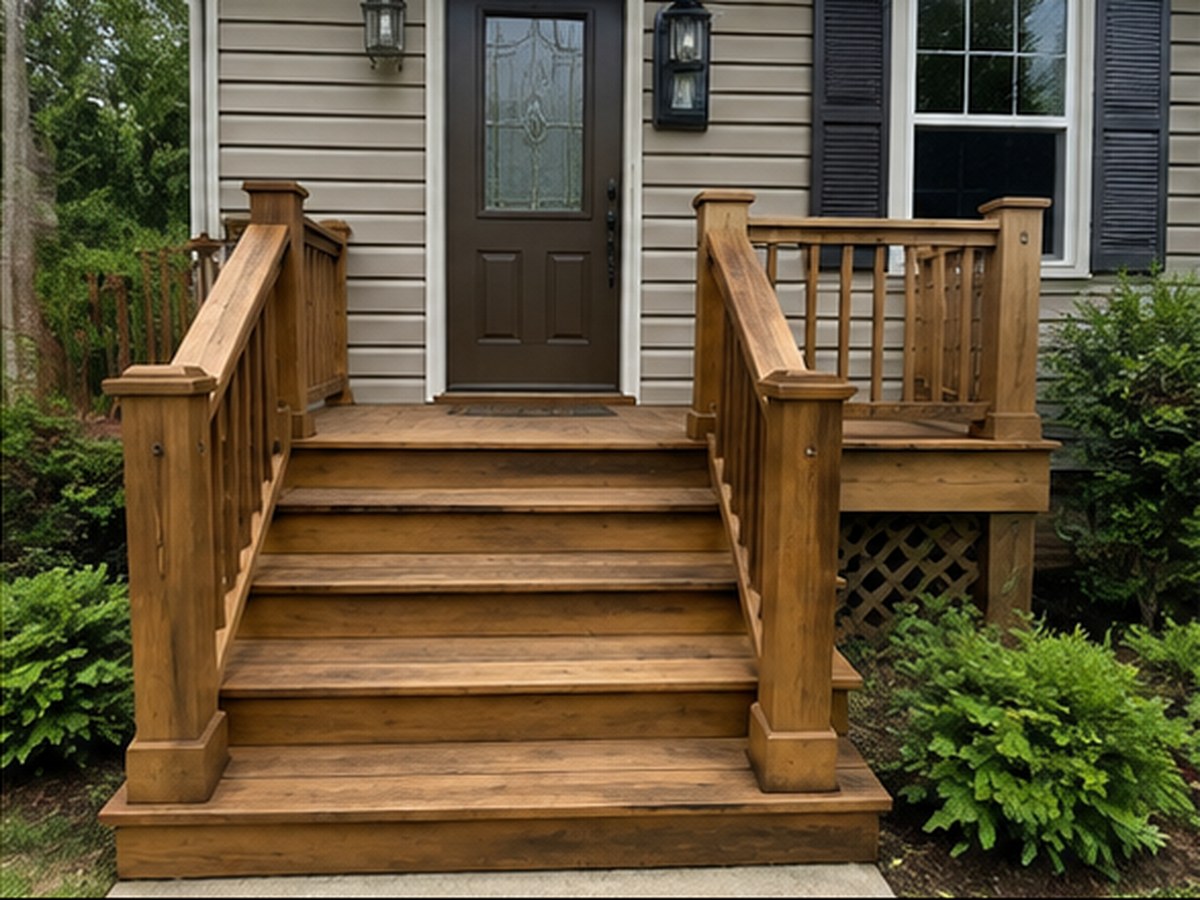
Open porches, landings, and entry steps
Full rebuilds where the old structure is gone
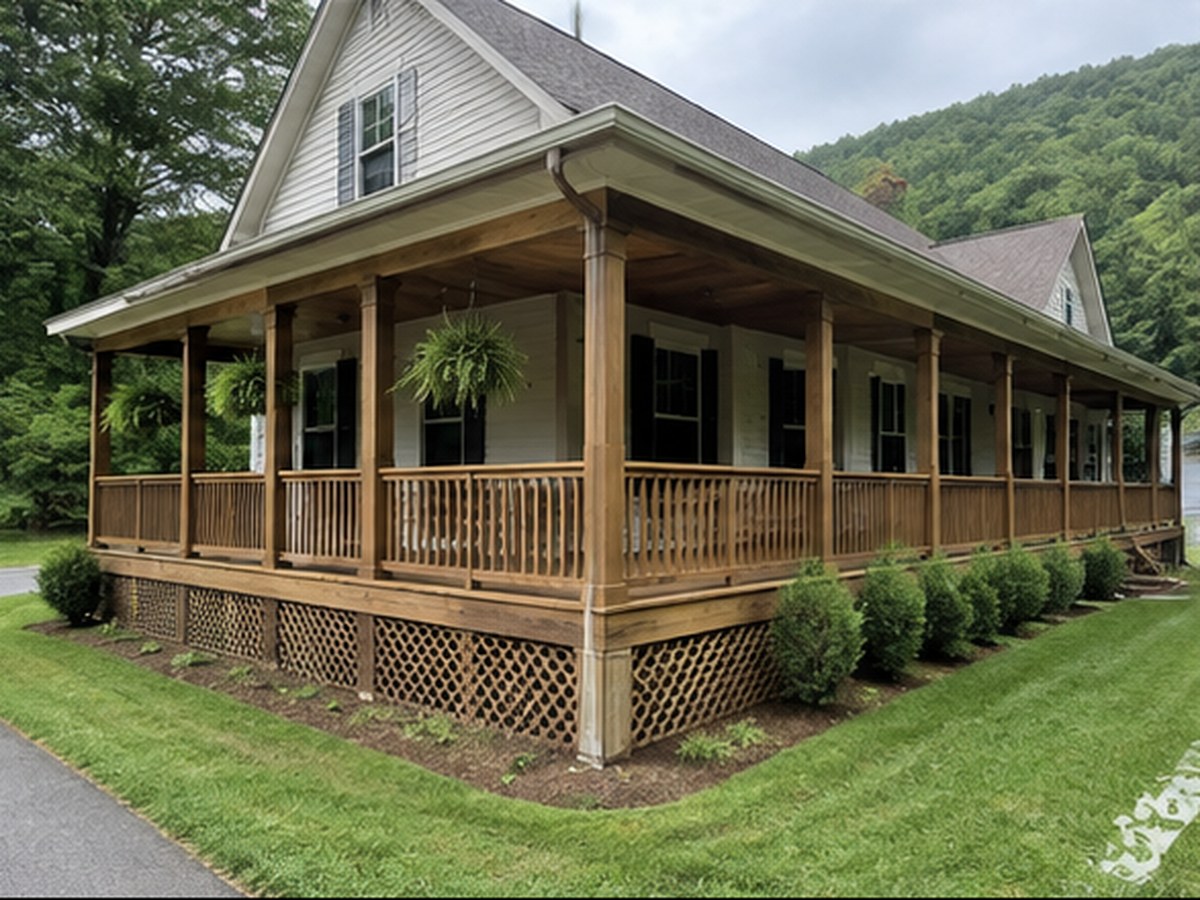
Wrap-around and side porches on corner lots
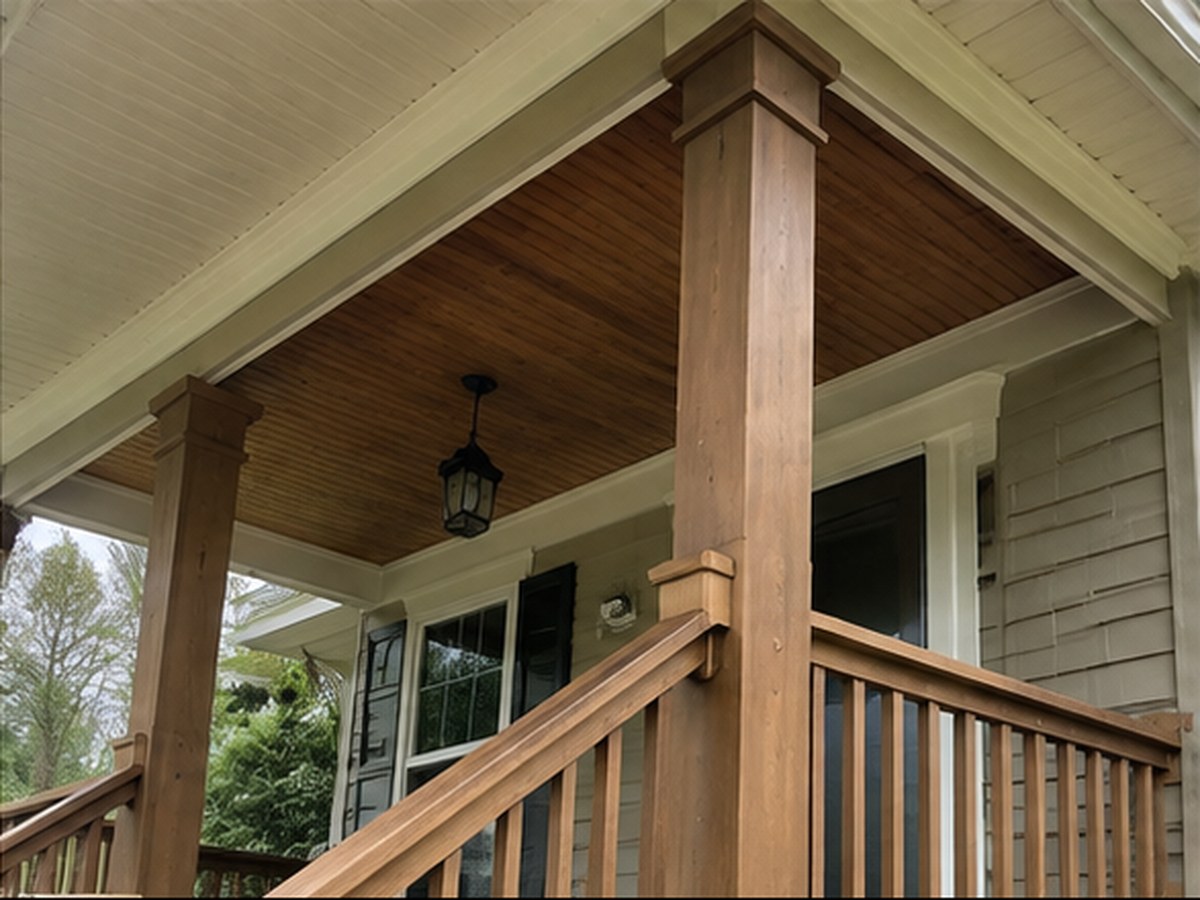
Columns, railings, ceilings, and trim
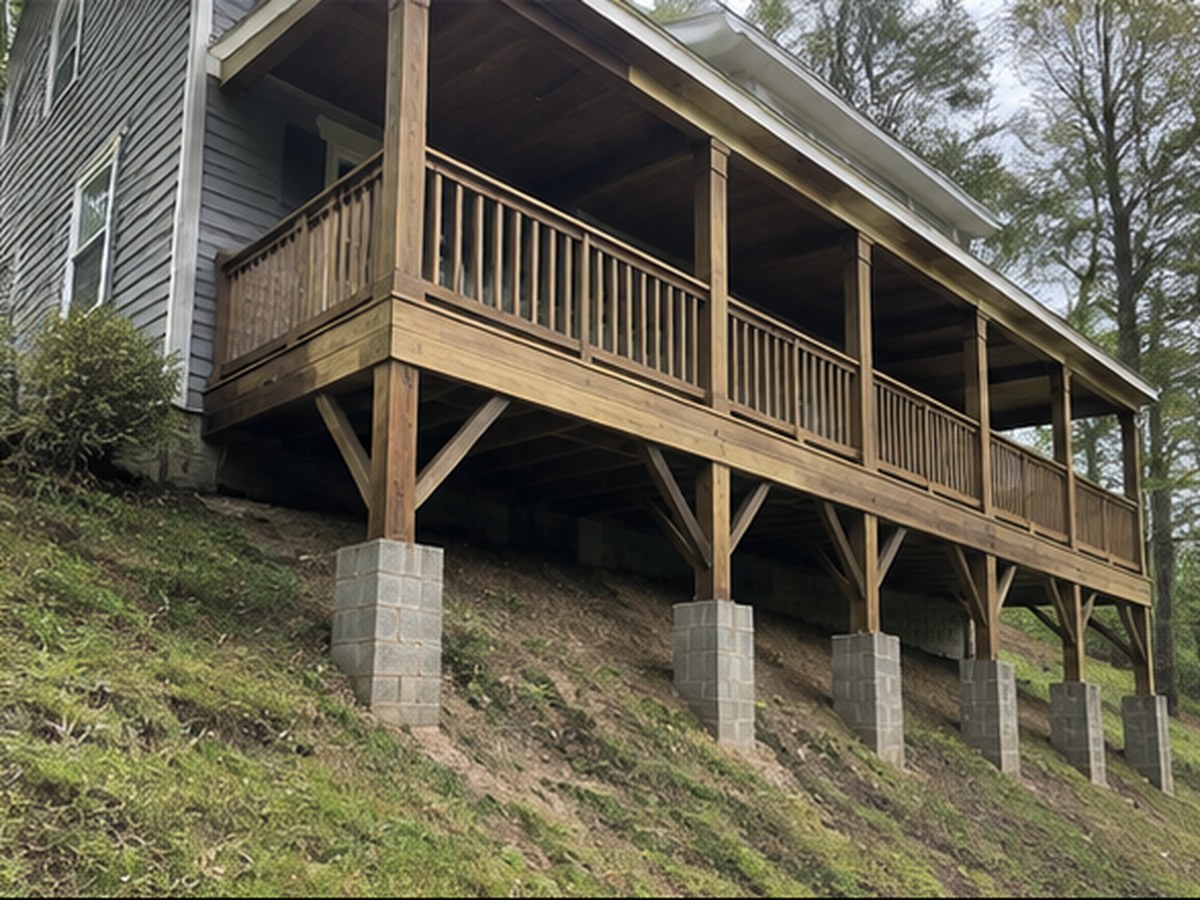
Footings and piers sized for the grade
Why Choose Mackwood Construction?
What you get when Mackwood does your porches — and what we won't do.
Free written quote, itemised before anything starts
We get underneath and look properly before quoting — not from the kerb
We'll tell you straight if a repair isn't worth doing
Based in Williamson — Mingo and Logan counties, about an hour out
Straight answers on permits, which differ either side of the county line
Built for this climate: drainage, flashing and ground contact done right
From first call to finished work — no surprises in between.
Step 1
Tell us about the project
Call, text, or send a message with what you're looking to build or repair. No form to fill in and no call centre — it comes straight to us, and you'll get a real answer about whether it's something we do.
Step 2
Send photos or schedule a look
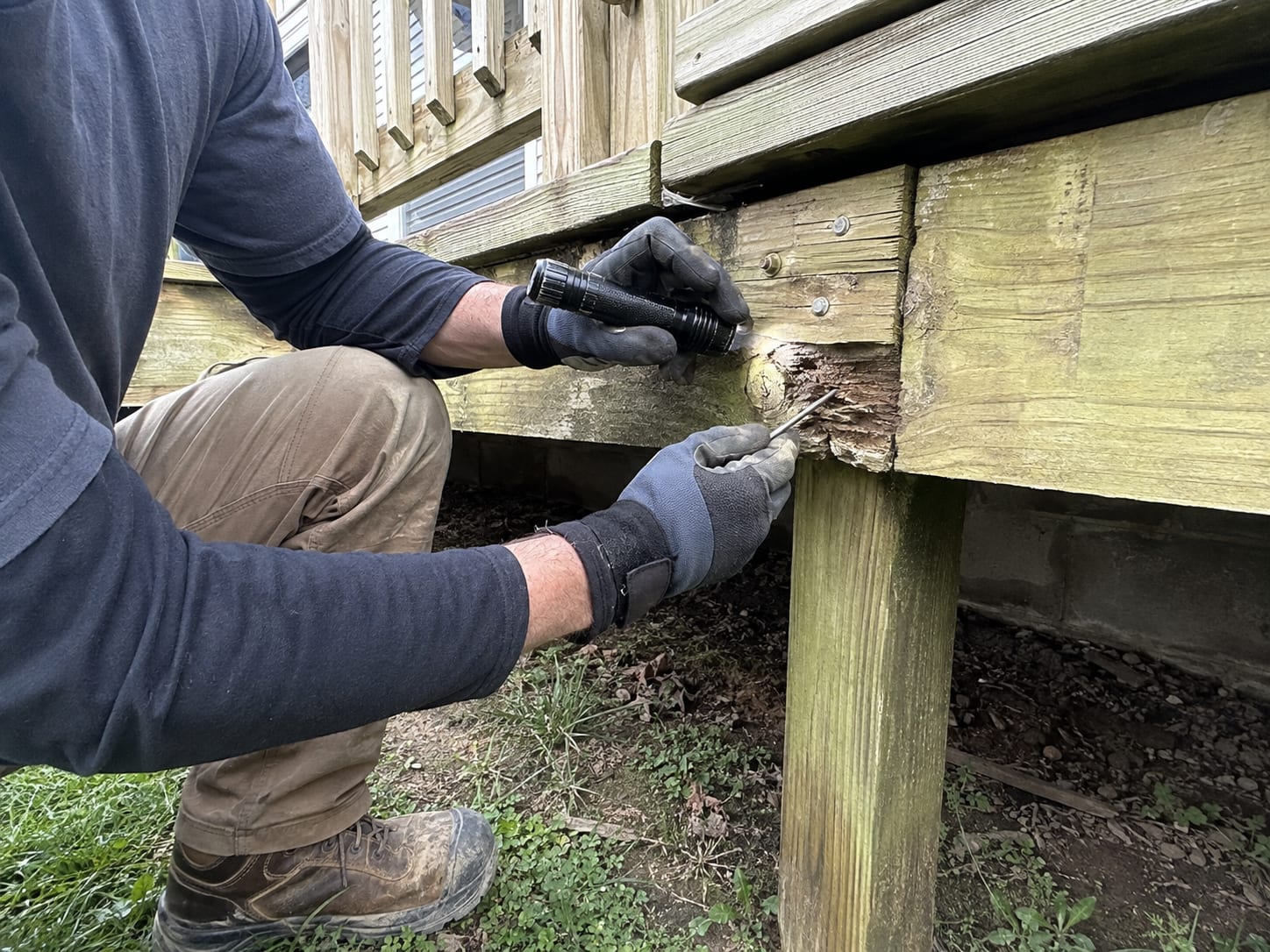
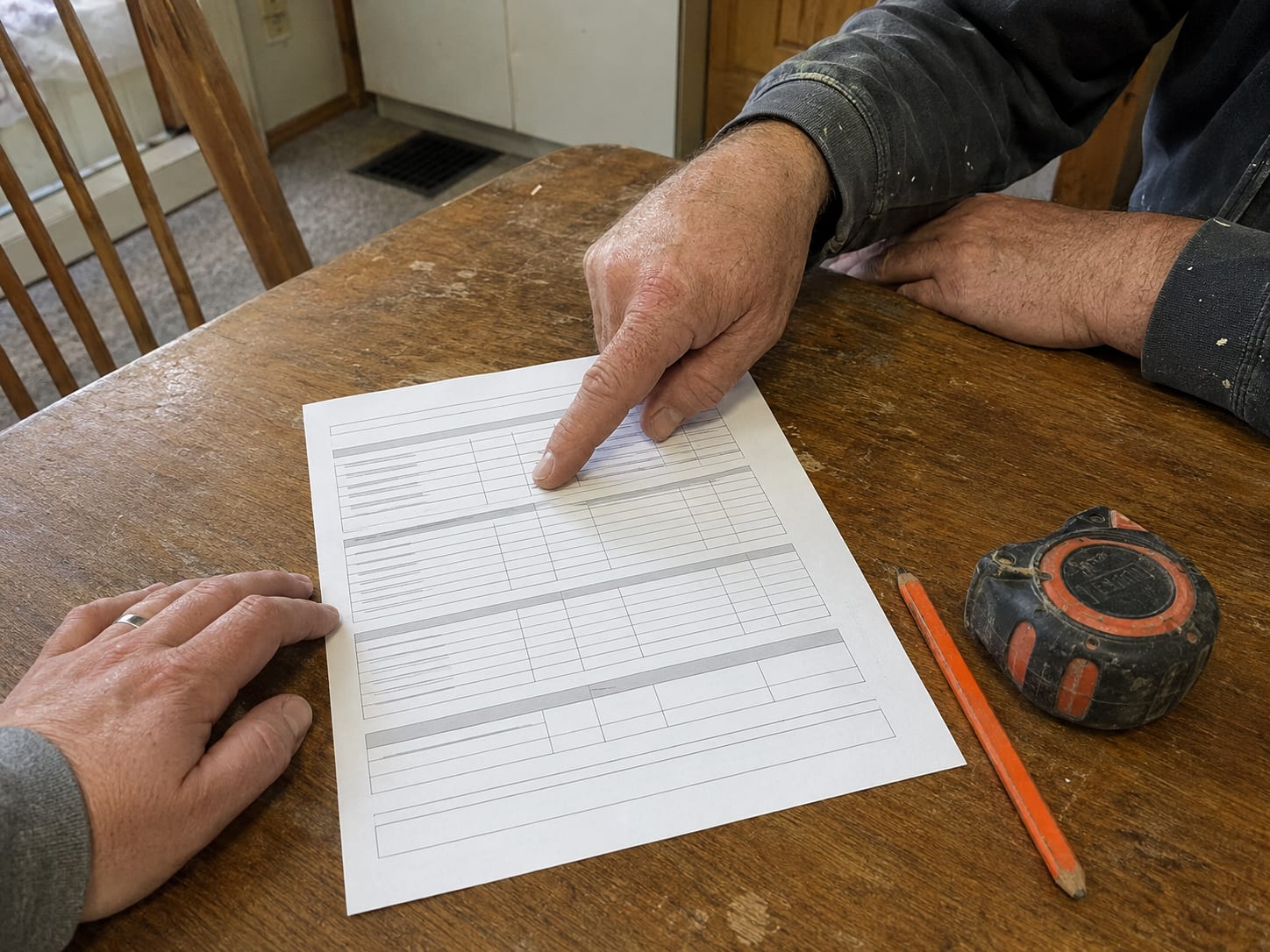
A few photos are often enough to tell us what we're dealing with. Where it isn't — anything structural, anything hidden underneath — we'll come out and look properly before quoting rather than guessing from the kerb.
Step 3
Get a clear quote
You get a written quote that itemises the work, so you can see what you're paying for and what you aren't. If we think part of it isn't worth doing, we'll say so. No pressure and no surprises at the end.
Step 4
We build it right
We turn up when we said we would, work clean, and haul the offcuts away with us. The job gets built to last in this climate — and we'll walk it with you before we call it finished.
Not sure what yours needs?
We'll come and look, then tell you straight — including if it isn't worth doing.
It depends on size, whether it is covered, and what the ground under it demands. A small open landing on level ground and a covered wrap-around on a falling lot are different projects by a wide margin. We quote free, in person, and in writing.
How long does a porch build take?
Most residential porches run one to three weeks depending on size and whether there is a roof. Footings need time to cure before anything goes on them, and weather moves the schedule. We give you a realistic window rather than an optimistic one.
Should I repair my old porch or build a new one?
If the framing and bearing points are sound, repair — it costs a fraction of a rebuild. If most of the structure would need replacing anyway, a rebuild gives you proper footings for close to the same money. We look underneath before saying which.
Can you build a porch on a steep lot?
Yes, and most lots here have some grade. It changes footing and post design rather than whether it can be done. Height off grade drives post size and bracing, and runoff has to be accounted for — it costs more than flat ground but it is normal work in this area.
Do you build covered porches?
Yes, including roof framing, columns, and ceilings. A covered porch is more involved because the roof load carries down through the columns to the footings, so the structure gets sized for it from the ground up.
Can you match the style of an older house?
Usually, closely enough that new work reads as part of the house. Post profiles, railing spacing, and board widths are generally matchable. Where something genuinely is not available any more, we will show you the nearest option before starting rather than substituting quietly.
Does a new porch need a permit?
Often yes. Requirements differ between incorporated towns and county addresses, and between Mingo and Logan counties. We confirm what applies to your address before starting.
Can you screen in or enclose a porch?
Screening an existing covered porch is straightforward if the structure is sound. Fully enclosing one into heated space is a bigger project that gets into insulation and usually permits — we will walk you through what is involved before quoting.
Do you give written quotes?
Yes, free and in writing after looking at the site in person. If a repair would serve you better than a new build, we would rather tell you that than take the larger job.
Most people are buying a result, not a list of tasks. Pick a topic to see how porches actually gets done and what moves the number.
More on porch work
This page is about new work. If what you have can be saved, porch repair is the cheaper answer and we would rather tell you that — there is a separate page for it.
It starts underneath, not with the floor plan
With new porch construction, most of the decisions that determine whether it lasts happen before anything visible goes on. Footing depth and diameter, how the posts bear, and where water goes are the whole job in this terrain — and they are invisible the day it is finished.
On the sloped lots common around here, footings carry more than they would on flat ground, and a post at the low end of a grade change can be doing several times the work of one at the high end. Sizing them to a default rather than to the actual load is the shortcut that shows up as a sagging corner in five years.
Water is the other half. On a hillside lot, runoff arrives at the back of the house and has to have somewhere to go that is not under your new structure. We look at where it currently goes before deciding where anything gets set.
What's involved
Footings below frost depth, sized to real load
Posts on standoff bases, never on soil or bare concrete
Ground-contact rated material anywhere near grade
Drainage considered before the first hole is dug
Covered or open
A roof changes the build considerably. The columns carrying it land on the porch framing, which means the structure underneath has to be sized for roof load as well as foot traffic, and the footings under those columns take the whole of it.
It also changes what the porch is for. A covered porch you will sit on through a wet spring is a different proposition from an open landing that mostly gets you to the door. Both are worth doing properly; they are not the same job or the same number, and it is worth being honest with yourself about which you will actually use.
Building onto an older house
Most of the housing stock here is early-to-mid 20th century, wood-framed on block or stone piers. Attaching new work to that is its own problem: the wall framing you are fixing to may be ninety years old, and it is worth knowing what condition it is in before hanging a structure off it.
Matching matters as much as fixing. Post profiles, railing spacing, board width, and column proportion can usually be matched closely enough that a new porch reads as original rather than obviously bolted on. Where the original detail genuinely cannot be sourced we say so and show you the nearest option.
Getting the proportions right is the part people underestimate. A porch that is too shallow to put a chair on, or a roof pitched wrong for the house, is a permanent mistake — and it costs the same to get right at the drawing stage as to get wrong.
Rebuilding versus repairing
A rebuild is the right call when the framing under an existing porch has gone far enough that repairing it means replacing most of it anyway. At that point you are paying rebuild money for a repair outcome, and you may as well get a structure that is properly footed and sized.
It is the wrong call when the bones are sound and the walking surface has failed. That is a repair, it costs a fraction of a rebuild, and any porch contractor WV homeowners bring out should tell you so plainly instead of quoting the bigger job.
We look underneath before saying which you are dealing with. If it is repairable, we will say that — including when it means the smaller invoice.
There is a third case worth knowing about, because it comes up often on houses of this age: the structure is sound but the porch is the wrong size or the wrong shape for how the house is used now. A porch too shallow to put a chair on is a common one, and it is not a repair problem at all. Widening it is effectively a new build on one side, and it is usually better value than living with something nobody sits on.
Steps, landings, and getting in the door
Steps are the part of a porch that gets used every day and the part most likely to hurt somebody, so they are worth getting right rather than treating as the last item on the list. Consistent rise between treads is the whole thing — a single step that differs from the others by half an inch is exactly what catches a foot in the dark.
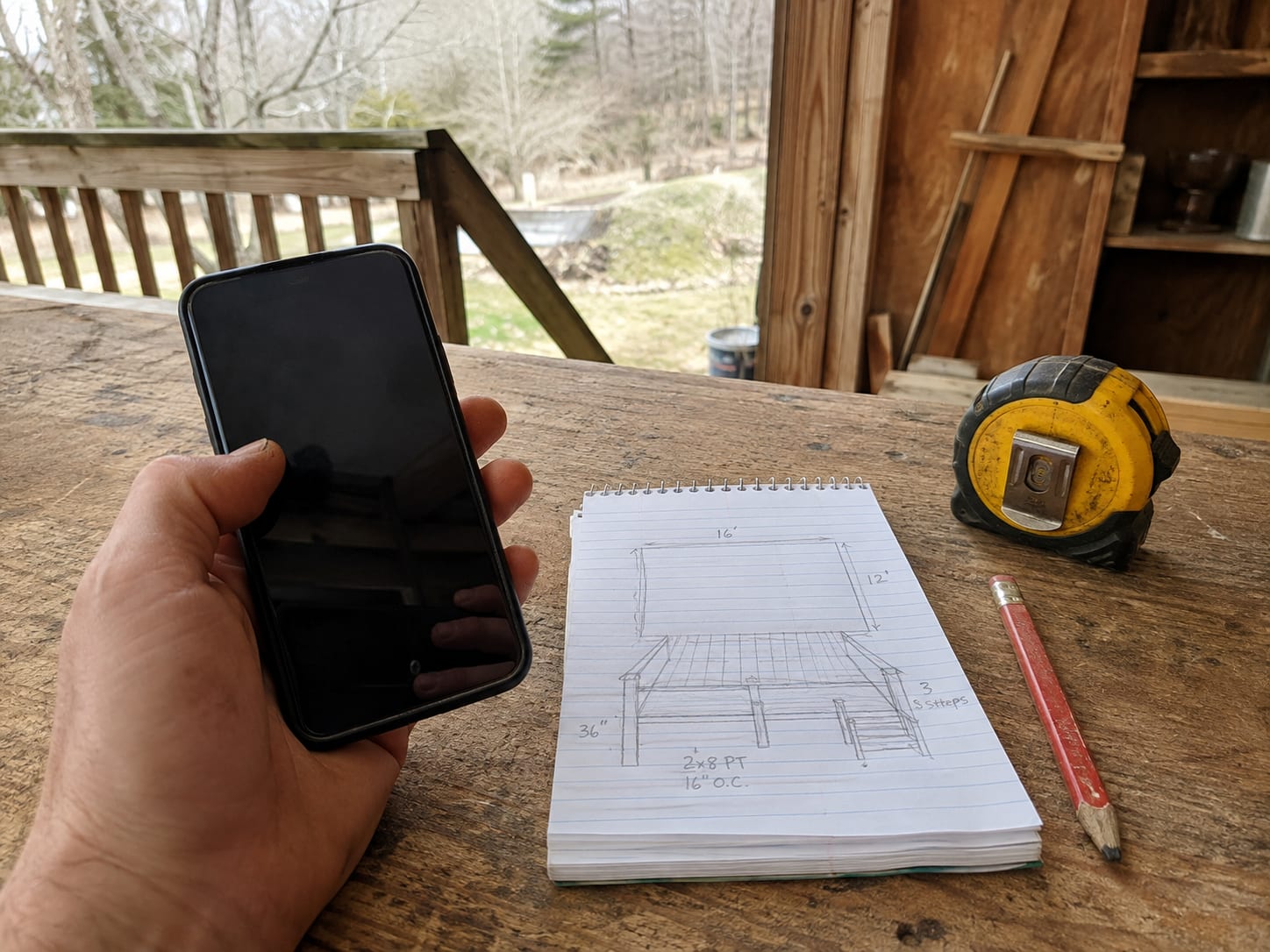
On a sloped site the step run is often longer than people expect, and that changes the footprint. A porch set three feet off grade needs somewhere for five or six steps to land, and if that lands in the driveway the layout has to change. Working it out on paper first is cheaper than discovering it once the deck is framed.
Stringers need proper bearing at the bottom — a pad or footing, not soil. Steps set straight onto the ground rot from the bottom up and take the handrail with them, which is the single most common failure we are called out to on otherwise sound porches.
When to build
New porch construction goes best from late spring through early autumn. Concrete needs reasonable temperatures to cure properly, and anything that gets sealed or painted needs dry weather to do it in. A porch framed in November can be structurally fine and still end up with a finish that does not last, because the sealer never cured.
That said, the planning is worth doing in winter. Working out size, layout, roof or no roof, and what the footings need takes a conversation and a site visit, not good weather. Booking the build for spring while the ground is still frozen usually means a better slot than calling in June when everyone else has decided the same thing.
What drives the cost
Nobody can price a new porch honestly from a photograph, because half the number is in the ground conditions and the grade. These are the things that actually move it.
What's involved
Size, and whether it is covered
How far the ground falls away — post height and footing size
Access for material and whether concrete can reach the site
Whether the existing wall framing needs work before attaching
Column, railing, and ceiling detail
How closely original detail has to be matched
Where we work
We are based in Williamson and cover Mingo and Logan counties — Delbarton, Matewan, Logan, West Logan, Holden, Chapmanville, Man, and the communities between them, roughly an hour out. West Virginia only.
What a porch build involves genuinely differs by town, so each one has its own page rather than the same text with the name swapped. A narrow lot in Matewan, a hillside street in Williamson, a manufactured home up a hollow in Lenore, and a newer house in Chapmanville that never had a porch are four different builds with four different answers underneath.
If you have searched porch builder near me and turned up a company three states away, that is the gap we fill. Mackwood is a porch builder West Virginia homeowners can actually get out to the house. Call or text and we will tell you straight whether your address is a drive we make.
Get a free quote for porches
Tell us what you're building or repairing and get a clear, no-pressure quote. Free quotes, honest answers, and craftsmanship built to last.