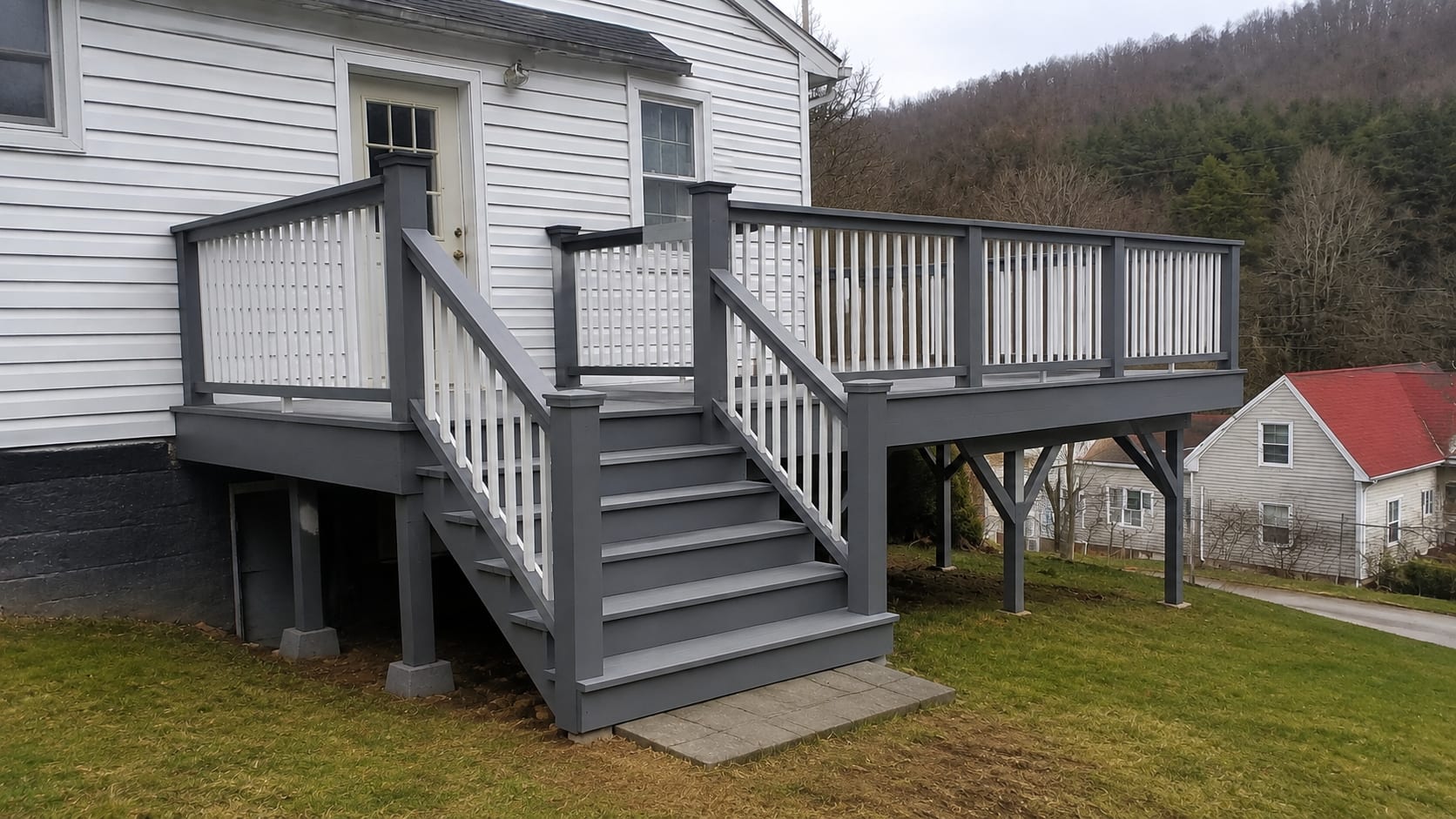
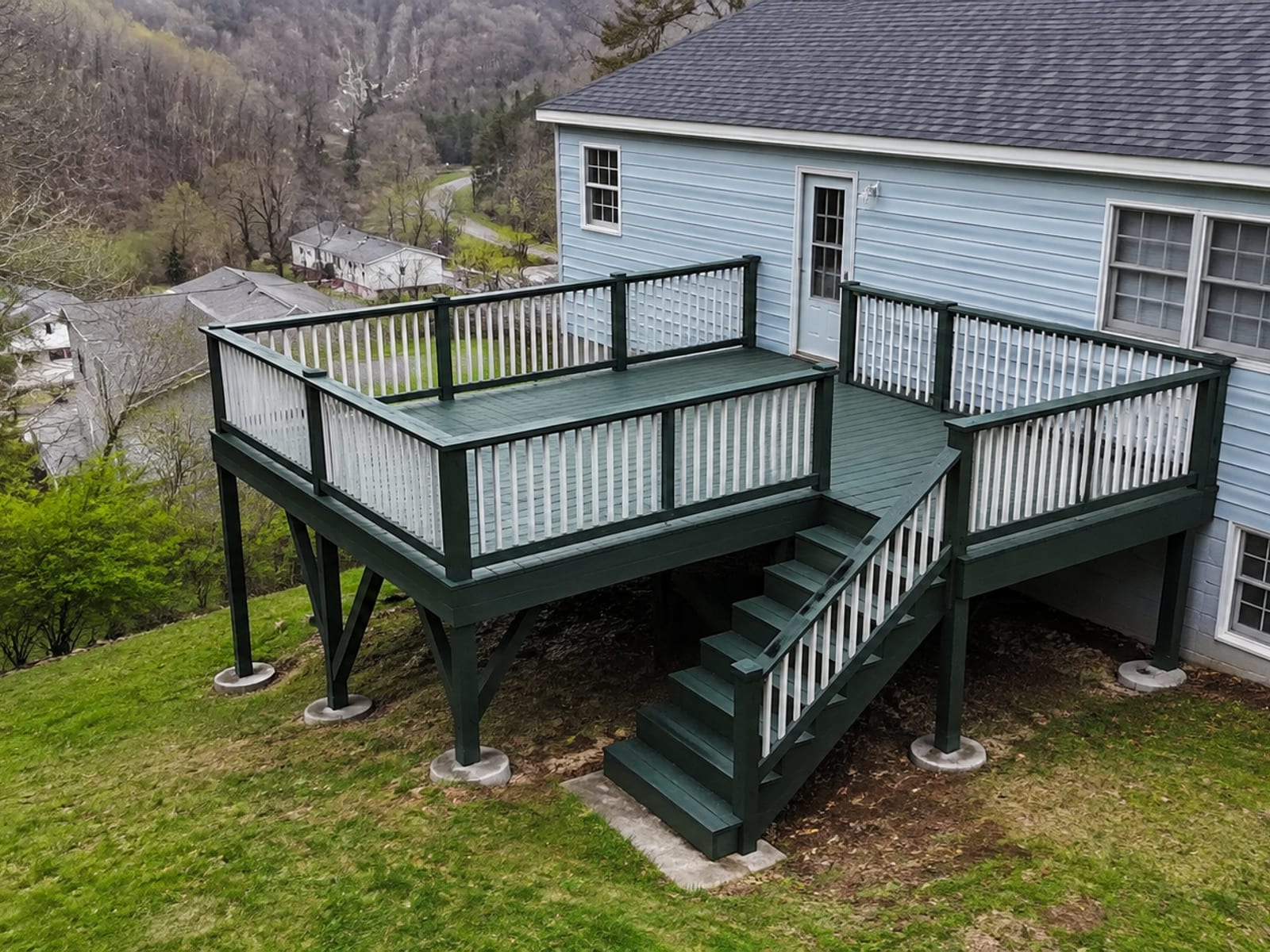
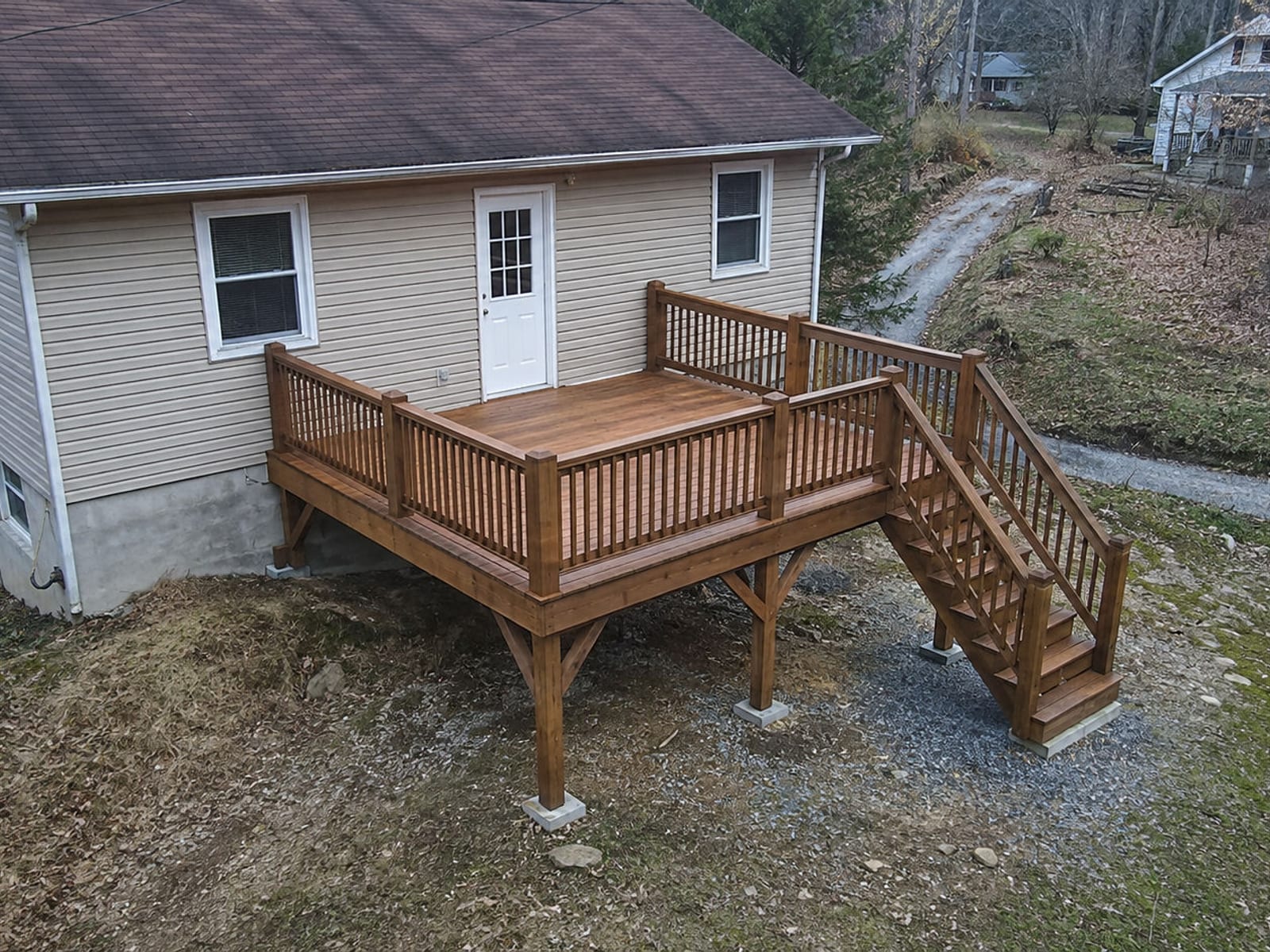
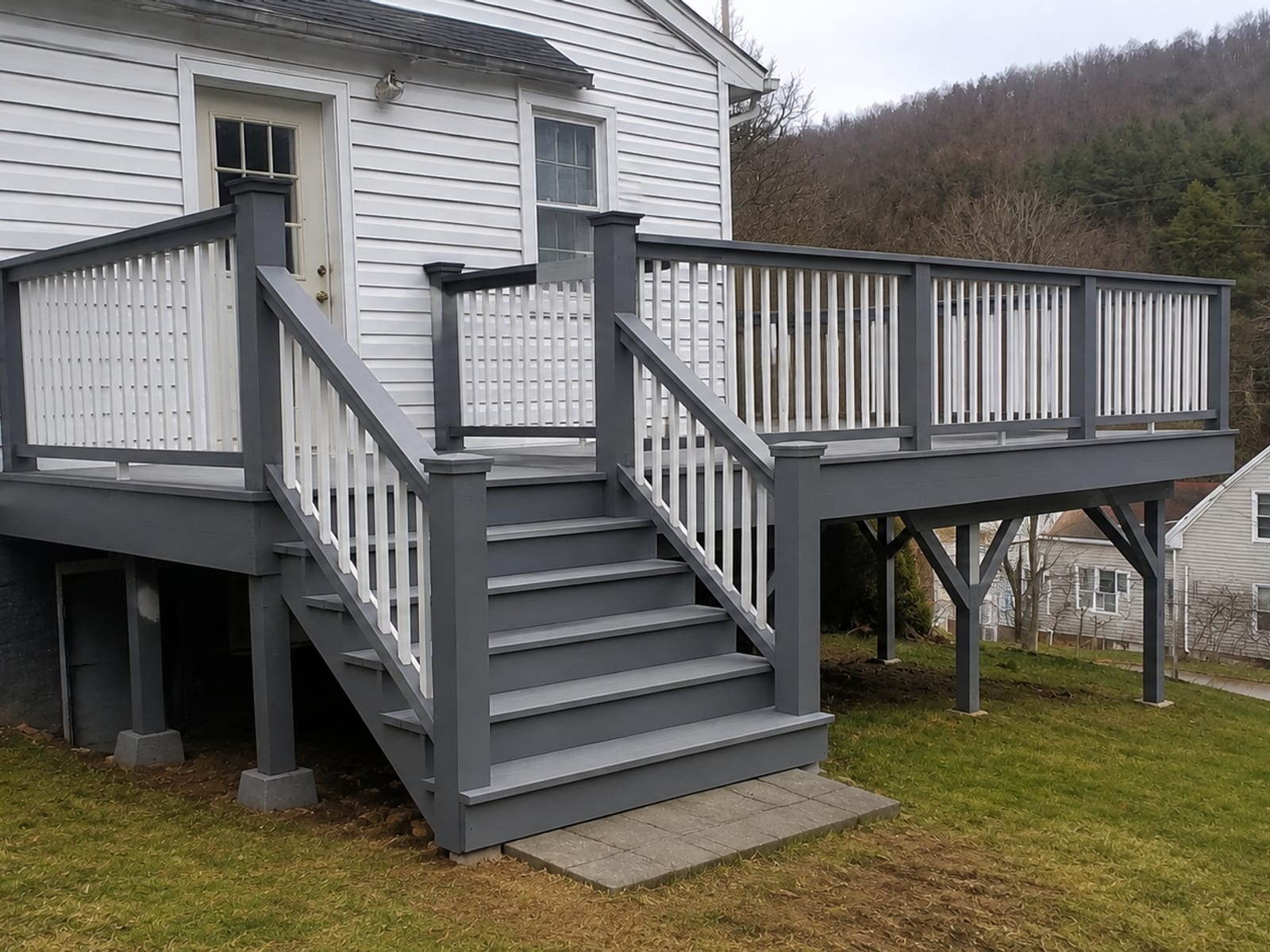
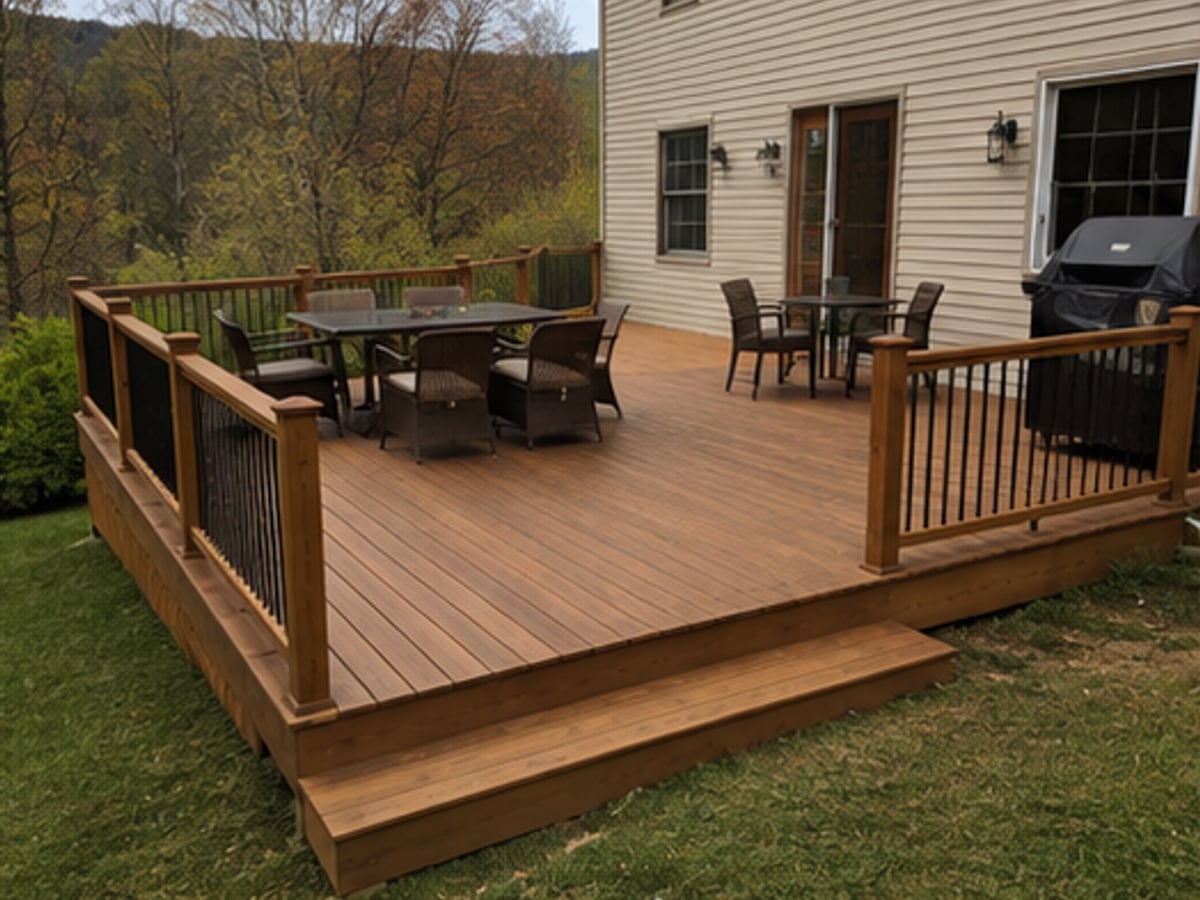
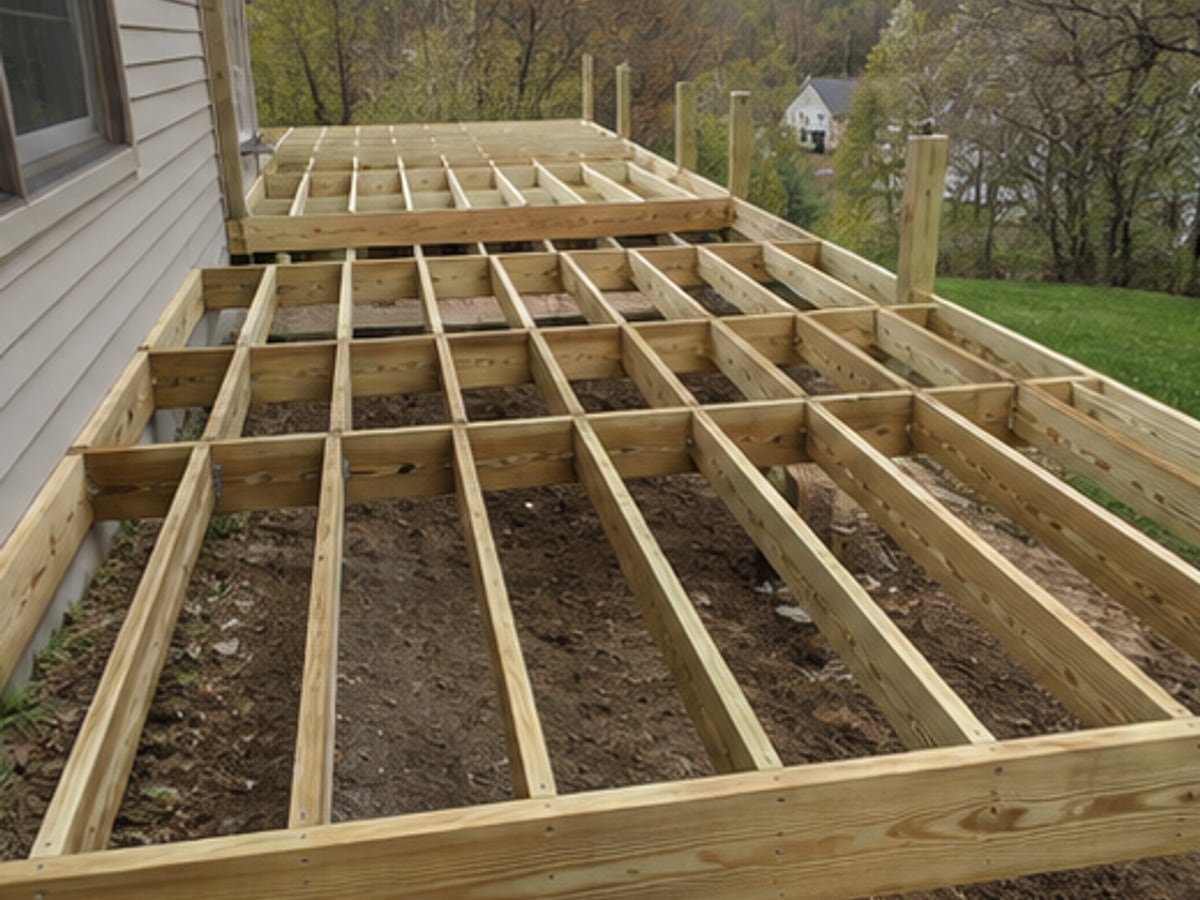
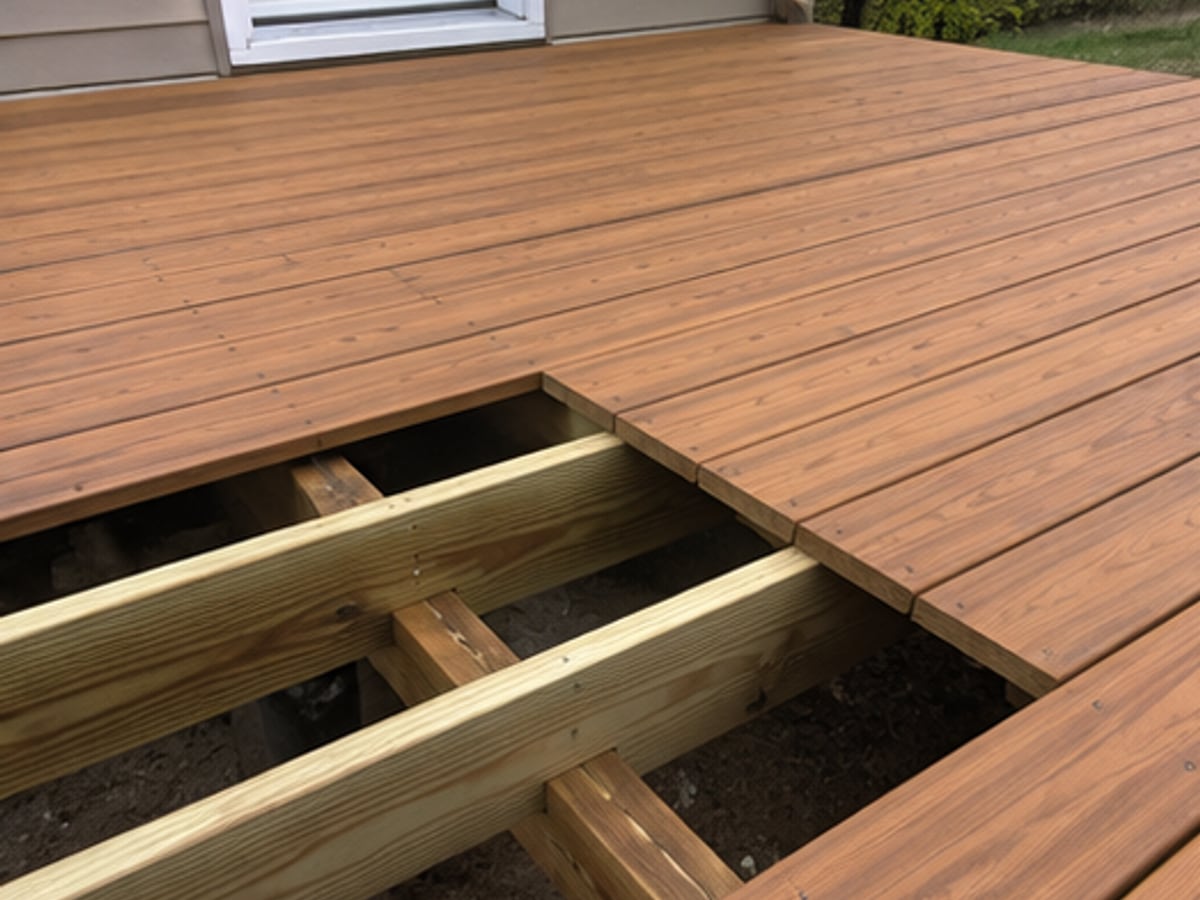
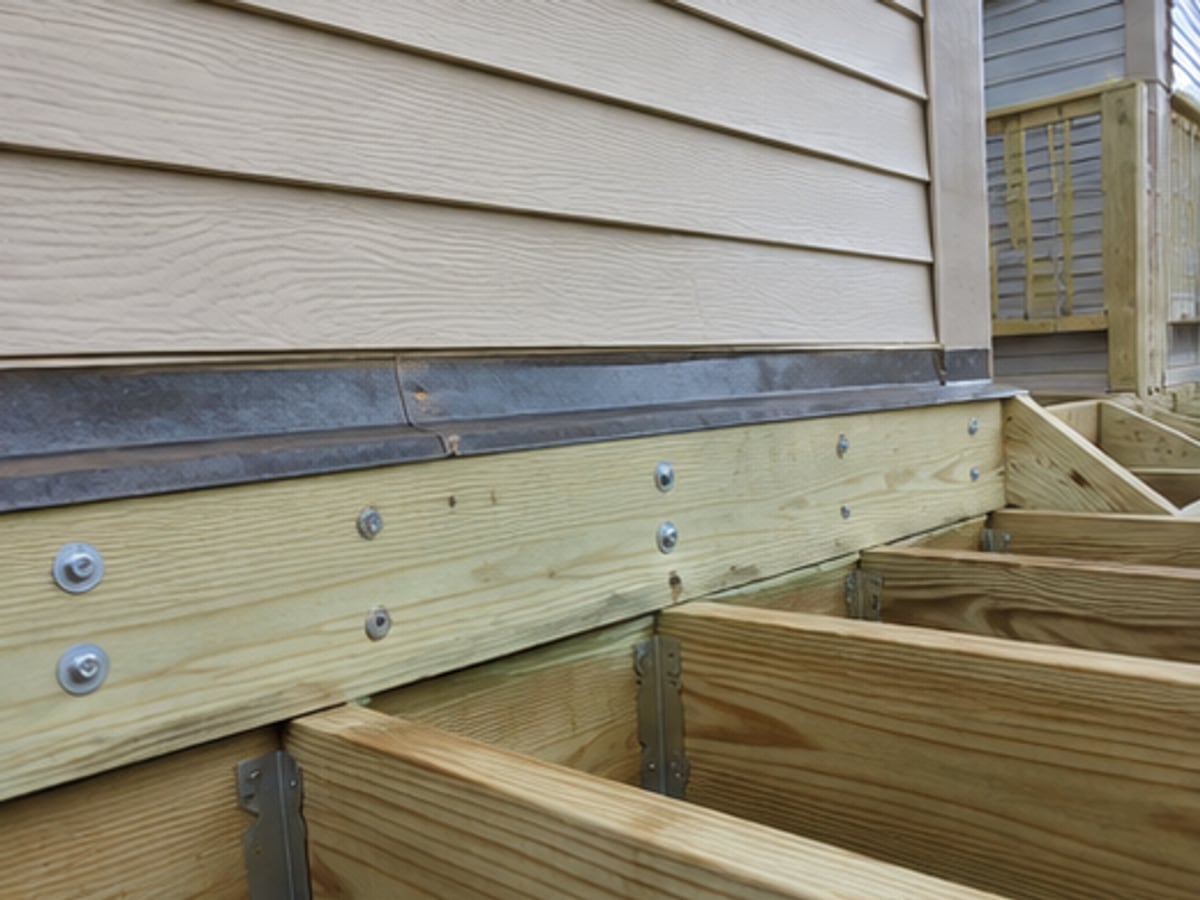
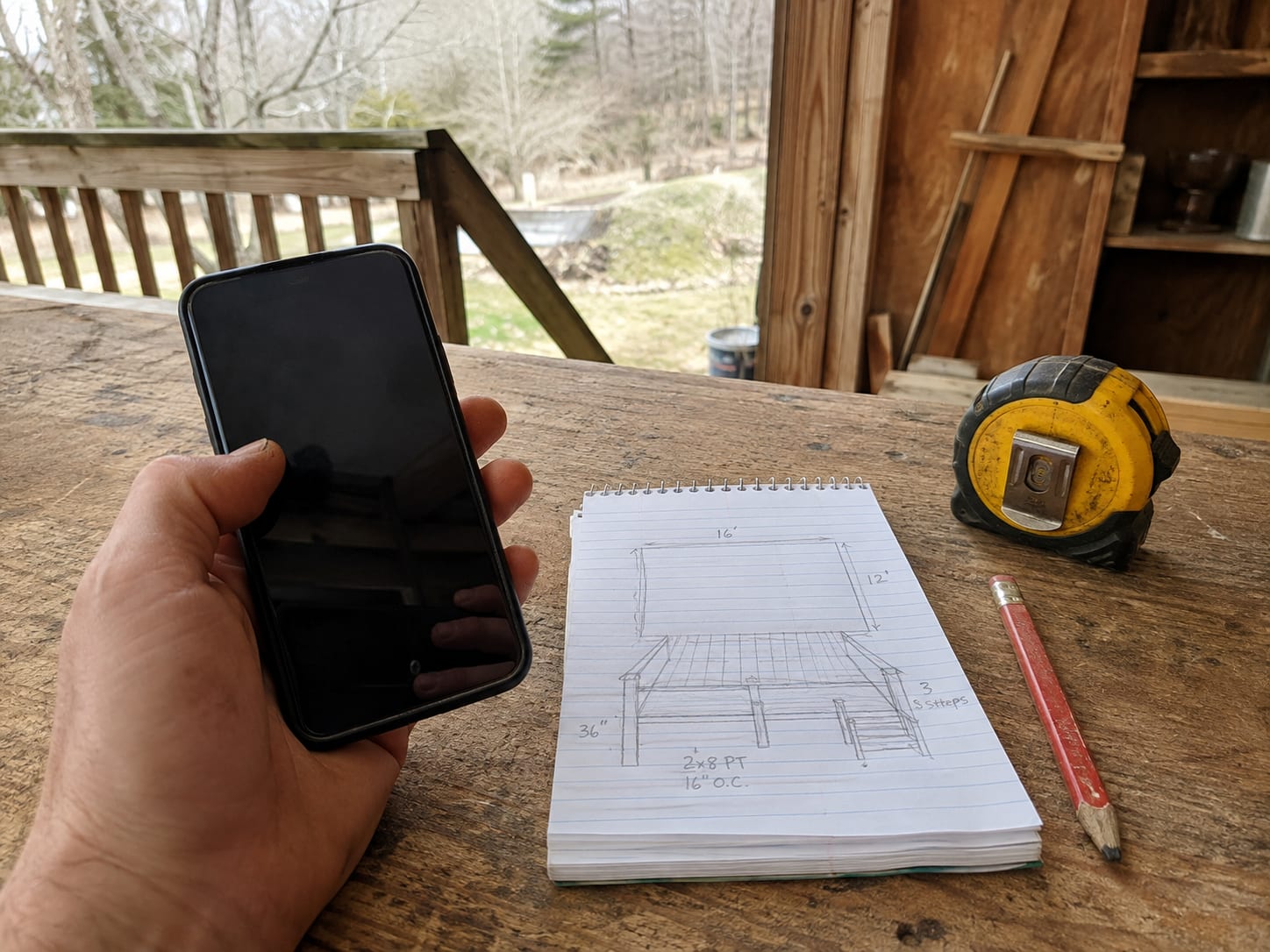
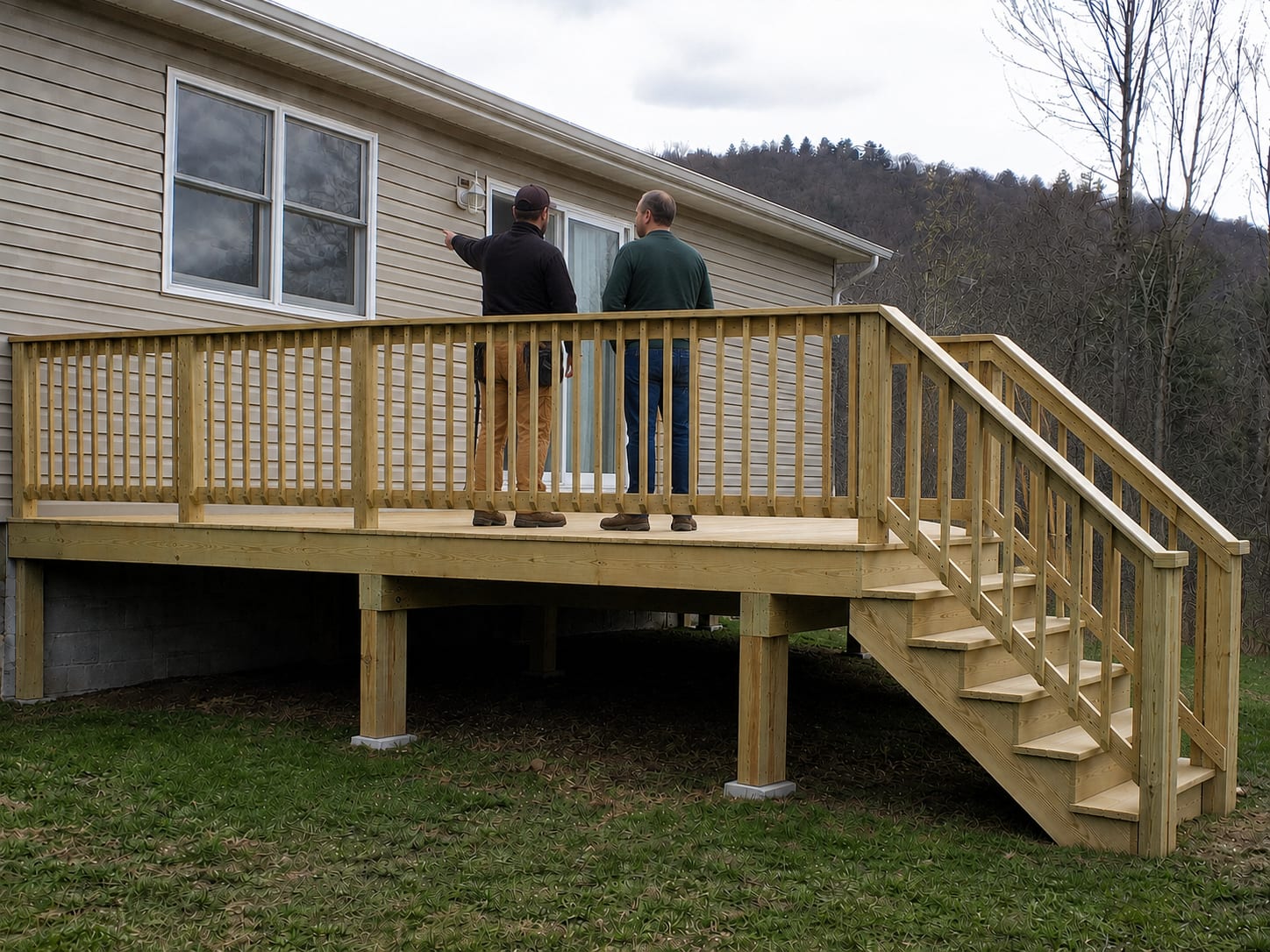
More deck work in Lenore involves a manufactured home than anywhere else we cover, and there is one rule that decides most of the job: the deck stands on its own footings. It does not hang off the home's frame. Everything else follows from that.
Had them out after the back steps started going soft underfoot. He came and looked properly before quoting anything, and told me the structure underneath was still sound — so it ended up a smaller job than I had braced myself for. Turned up when he said he would, cleaned up after himself, and the price at the end was the price we agreed. Not much more you can ask for.
Owner replied
S
Skyler White
9 months ago
Called on a Tuesday and had someone out the same week. What I appreciated most was being told straight what needed doing now and what could safely wait until spring. No pressure and no trying to talk me into the bigger version of the job. It has held up fine through the winter since.
T
Trevor Alford
2 months ago
The quote came through itemised and the final bill matched it, which has honestly not been my experience with everyone around here. They worked around an awkward driveway without once making it my problem, and left the place tidier than they found it. Would have them back.
K
Kaleb Withrow
3 weeks ago
Fair price, showed up on time, tidy work. No complaints.
See something like yours?
Send a few photos and we'll tell you what it'll take — free written quote, no pressure.
A manufactured home's chassis and wall framing are engineered to carry the home, not to carry a deck full of people, furniture, and snow load hanging off one side of it. Attaching a ledger to it puts load somewhere it was never designed to go, and it can also work against the home's own tie-downs and levelling.
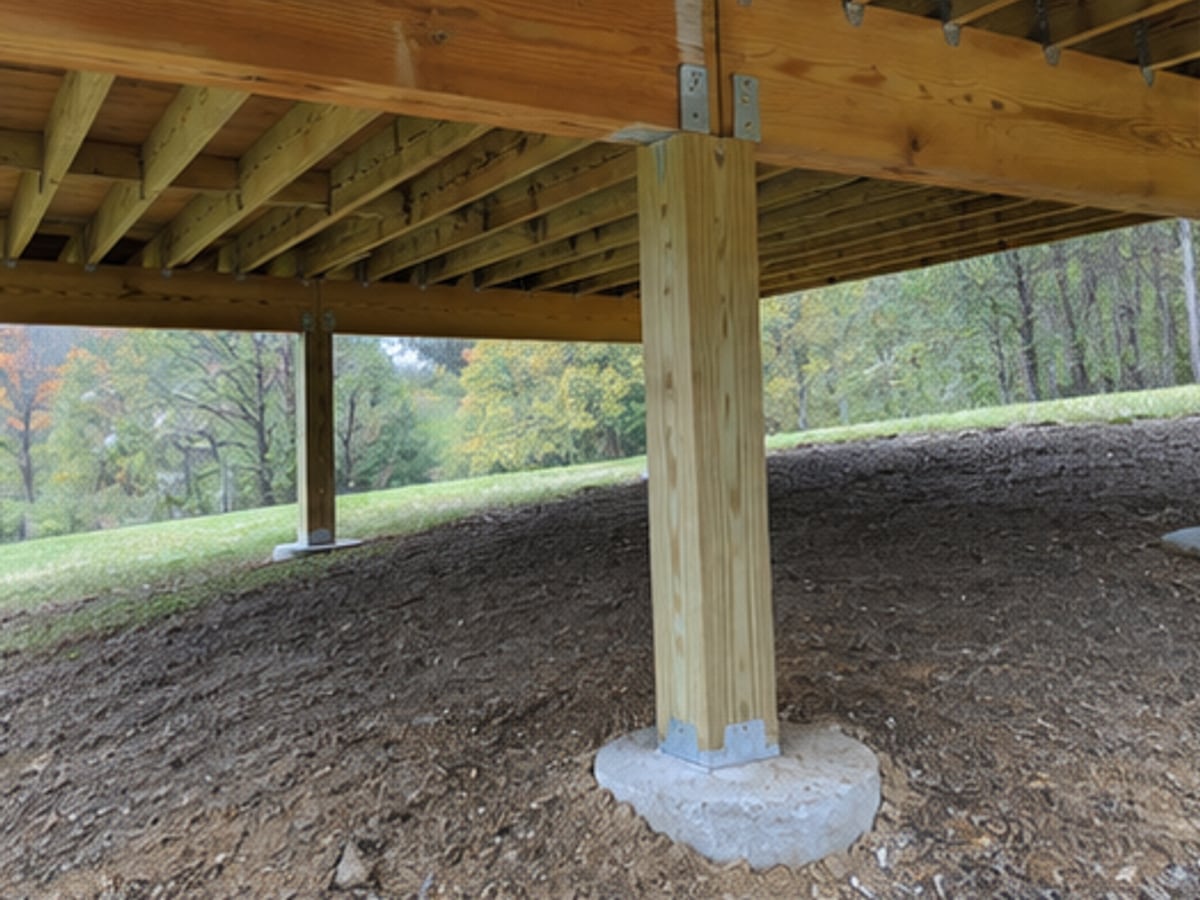
Independent posts and footings, below frost depth
No load transferred to the home's frame or wall
Stair and landing sized to the door height as it actually sits
Ground-contact material and standoff bases at every post
Existing attached decks assessed before anything is added to them
Why Choose Mackwood Construction?
What you get when Mackwood does your decks — and what we won't do.
Free written quote, itemised before anything starts
We get underneath and look properly before quoting — not from the kerb
We'll tell you straight if a repair isn't worth doing
Based in Williamson — Mingo and Logan counties, about an hour out
Straight answers on permits, which differ either side of the county line
Built for this climate: drainage, flashing and ground contact done right
From first call to finished work — no surprises in between.
Step 1
Tell us about the project
Call, text, or send a message with what you're looking to build or repair. No form to fill in and no call centre — it comes straight to us, and you'll get a real answer about whether it's something we do.
Step 2
Send photos or schedule a look
A few photos are often enough to tell us what we're dealing with. Where it isn't — anything structural, anything hidden underneath — we'll come out and look properly before quoting rather than guessing from the kerb.
Step 3
Get a clear quote
You get a written quote that itemises the work, so you can see what you're paying for and what you aren't. If we think part of it isn't worth doing, we'll say so. No pressure and no surprises at the end.
Step 4
We build it right
We turn up when we said we would, work clean, and haul the offcuts away with us. The job gets built to last in this climate — and we'll walk it with you before we call it finished.
Not sure what your deck needs?
We'll come and look, then tell you straight — including if it isn't worth doing.
I already have a deck attached to my manufactured home. What now?
We'd look at it before recommending anything. What matters is how much load is actually going into the home's frame and what the posts are standing on. Sometimes the fix is adding proper footings and posts so the deck carries itself and the attachment becomes incidental, which is a lot less work than removing and rebuilding.
Do free-standing decks feel less solid?
No, when they're built right. Solidity comes from footing size, post spacing, and bracing, not from being bolted to a wall. A properly braced free-standing deck is stiffer than a lot of attached ones we're called out to look at.
How deep do the footings have to go?
Below frost depth, which is the point at which seasonal ground movement stops lifting them. That is the single most common thing skipped on a cheap build, and it is why so many decks around here are out of level within a few winters.
Can you build steps and a landing without a full deck?
Yes, and it's a common job here. A proper landing and a stair run with a consistent rise is a genuine safety improvement over what a lot of doors currently open onto, and it's a fraction of the cost of a deck.
I have a manufactured home. Can you build a deck onto it?
Yes, and it should be built free-standing on its own footings rather than hung off the home's frame. That's the correct way to do it and it's what we'll quote. If you have an existing deck that was attached to the home, that's worth us looking at.
Water runs down the hollow toward my house. Can carpentry fix that?
Carpentry can make the structure handle it — proper standoffs, ground-contact material where it belongs, drainage kept away from posts and steps. Regrading the ground itself is a different trade and we'll tell you that rather than charging you to not fix it.
My driveway won't take a trailer. Is that a problem?
It's common up the hollows here. It affects how material gets in and how many trips it takes, which we build into the quote instead of discovering on the day.
Most people are buying a result, not a list of tasks. Pick a topic to see what we look at before quoting in Lenore.
More on deck work in Lenore
So the deck gets its own posts and its own footings, set below frost depth, standing independent of the home. It comes right up to the door and the threshold works exactly as you would expect. Structurally it simply doesn't lean on anything it shouldn't.
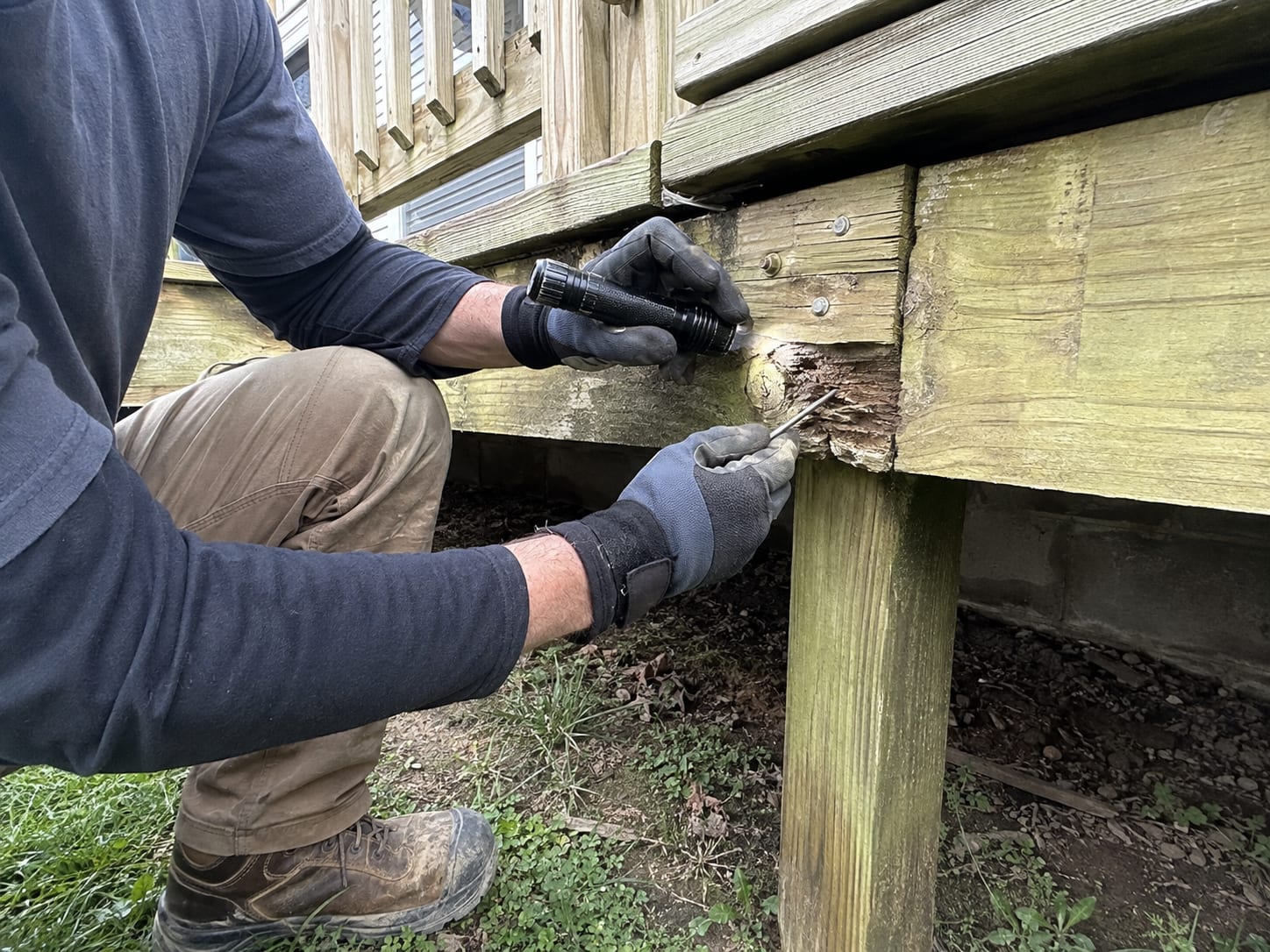
If you already have a deck that was attached, that's worth us looking at. It isn't automatically an emergency, but it is the first thing we'd check, along with whether the posts are standing on footings or on blocks set on the dirt.
Hollow runoff and what it does underneath
Away from the main river the water problem here is creek and hillside runoff rather than flood stage. Properties up the hollows sit below ground that sheds water toward them, and the pattern is a structure that never fully dries out.
That is hard on deck framing in a specific way: it works for years and then goes quickly, because the rot is at the bearing points where nobody looks. Post bottoms, the underside of stair stringers where they meet the ground, and any framing that was ordinary treated lumber where it should have been rated for ground contact.
Building for it isn't complicated, it is just not optional — footings that go past the wet surface soil, posts sitting on standoffs rather than in it, and material rated for where it actually is rather than where it looks like it is.
Getting to the site
The WV-65 addresses are easy. Up the hollows the driveways get long, gravelled and steep, and some of them will not take a loaded trailer at all. That is the part worth knowing before a quote, because it decides how material arrives and how many trips it takes.
The drive itself isn't the issue at about twenty-five minutes from Williamson. It's the last two hundred yards, which is why we like to see the access rather than price it blind.
Homes around Lenore
Lenore is spread out rather than gathered into a town centre — houses sit along WV-65 and up the creek hollows that feed it, on deeper and more open lots than the river towns get. The stock is mixed: older wood-framed houses, a fair number of manufactured homes that have had decks, porches, and roofed entries added to them, and outbuildings of every vintage. Those add-ons are frequently the work we're called about, because a deck built onto a manufactured home has to be free-standing and often wasn't.
What we see locally
Away from the main river, the water problem here is creek and hillside runoff rather than flood stage. Properties up the hollows sit below ground that sheds water toward them, and the recurring pattern is a structure that never fully dries — damp crawl spaces, rot at the base of steps and posts, and ground-contact framing that was not rated for it. It works for years and then goes quickly.
Getting to the job
The WV-65 addresses are easy. Up the hollows the driveways get long, gravelled, and steep, and some of them will not take a loaded trailer at all. About twenty-five minutes from Williamson, so the drive is not the issue — the last two hundred yards sometimes is, which is why we like to see the access before quoting.
Get a free quote for decks in Lenore
Tell us what you're building or repairing and get a clear, no-pressure quote. Free quotes, honest answers, and craftsmanship built to last.